
Certificate of Feral Science
Science isn't memorizing facts. Science is weaponized curiosity.
The Certificate of Feral Science is a community-based educational program from the Washburn CHAOS Lab where participants learn how to think like scientists by applying real scientific reasoning to the fictional worlds they already love. Upon successful completion, participants receive an entirely official and unquestionably legitimate Certificate of Feral Science certifying their ability to scientifically interrogate fictional phenomena.
The Washburn CHAOS Lab Certificate of Feral Science is a community-based science education program built around a simple idea: Science isn't a collection of facts. It's a way of looking at the world.
At its core, science is the process of observing systems, asking questions, identifying assumptions, testing ideas, evaluating evidence, and communicating conclusions. The problem is that most people encounter science as vocabulary lists, memorization exercises, and multiple-choice exams instead of the chaotic, creative, occasionally sleep-depriving detective work it actually is.
So we decided to fix that. Instead of learning scientific reasoning from textbook examples, the Certificate of Feral Science program uses fictional worlds as giant thought experiments. Vampires become case studies in physiology. Ghosts become questions about energy transfer and information persistence. Alien ecosystems become exercises in ecology and evolution. Magic systems become opportunities to analyze rules, constraints, assumptions, and consequences. Suddenly you're learning biology, chemistry, geology, physics, systems thinking, and experimental design while arguing with complete sincerity about whether a xenomorph should collapse under its own biomechanical nonsense.
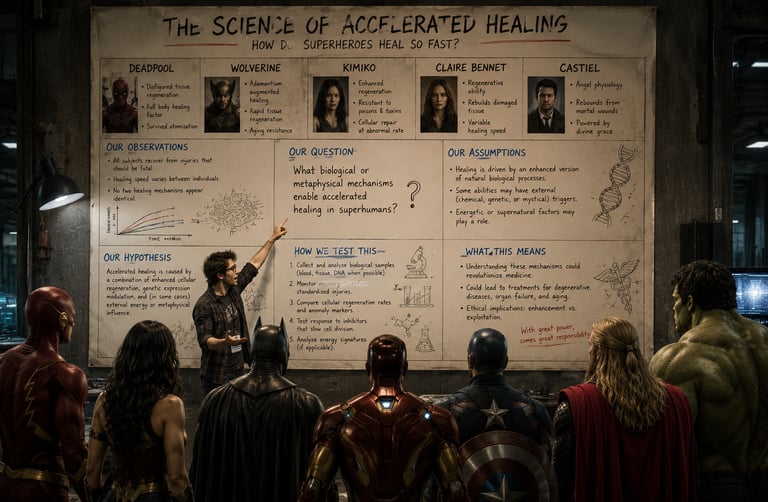
The goal is not to prove whether fictional worlds are realistic. The goal is to learn how scientists think. Throughout the program, participants learn to separate observations from assumptions, identify gaps in knowledge, evaluate evidence, build hypotheses, design experiments, recognize weak arguments, defend conclusions, and communicate complex ideas clearly. Every project starts with a question and follows the same scientific reasoning framework used by real researchers:
Observations → Questions → Background→ Assumptions → Hypothesis → Experiments → Analysis → Conclusions → Sharing
Along the way you'll discover that nearly every argument on the internet eventually comes down to hidden assumptions and incomplete data. Who knew.
The program is designed for curious humans of all backgrounds. You do not need a science degree. You do not need a laboratory. You do not need to know what a mitochondrion does without Googling it first. If you enjoy asking questions, building theories, solving puzzles, debating fictional nonsense, or trying to figure out how impossible things might work, you're qualified.
The curriculum is divided into progressive certification levels that build increasingly advanced scientific reasoning skills.
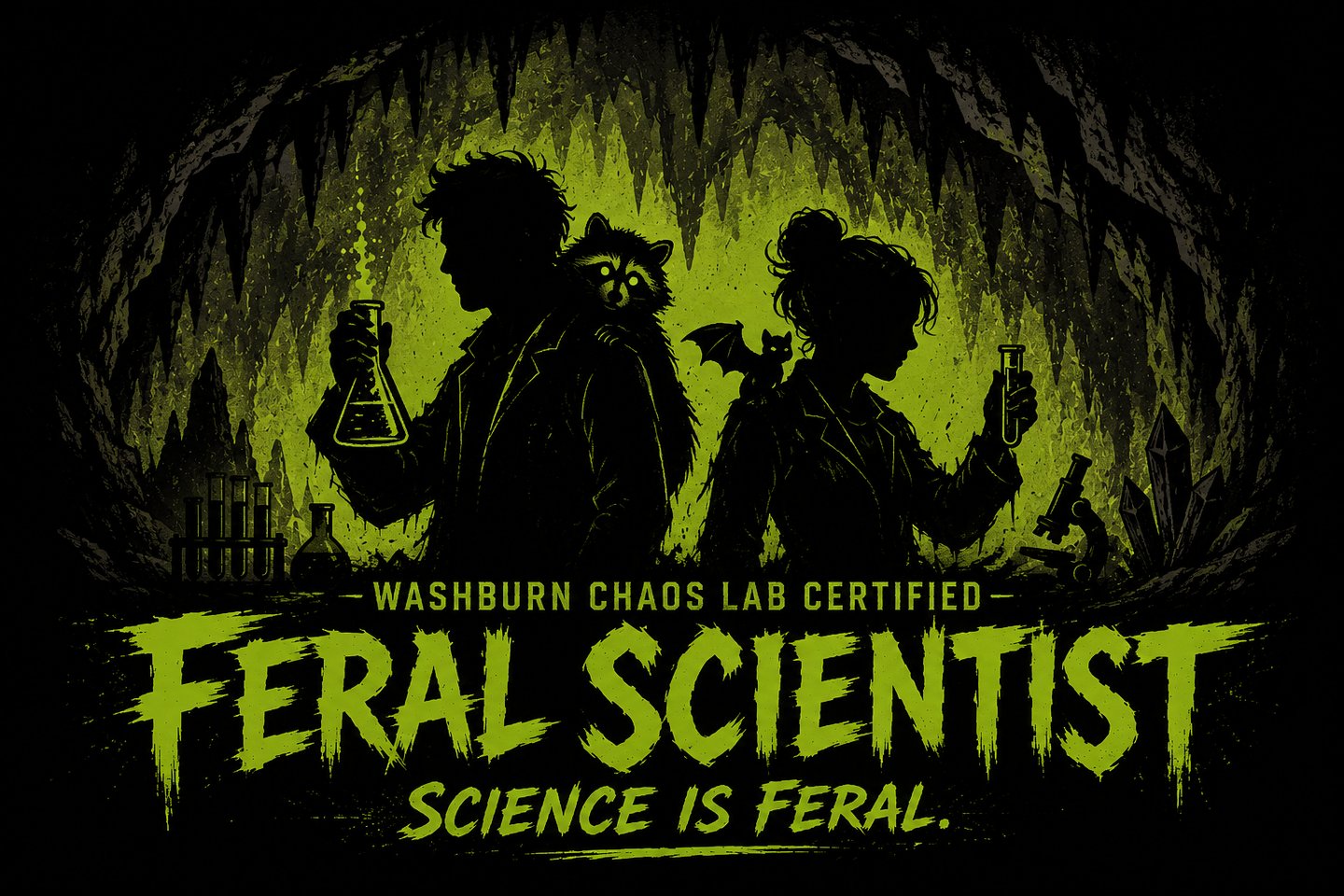
Coming Soon...
Feral Science Curriculum
Provide a general summary of the services you provide, highlighting key features and benefits for potential clients.
Feral Science 201
Science Across Unreal Worlds
Things get weirder from here. Instead of analyzing a single fictional system, you'll compare how similar ideas operate across multiple universes. Why do vampires follow different rules depending on the franchise? Why do some ghosts haunt locations while others haunt people? By comparing assumptions, mechanisms, and rule systems across different fictional worlds, you'll learn comparative analysis, pattern recognition, systems thinking, and how scientific models change when new evidence or new assumptions enter the equation.
Feral Science 101
Real Science in Unreal Worlds
Every scientific investigation starts with a question, and this course is all about learning how to ask the dangerous ones. Whether your brain is occupied by Supernatural, Marvel, Warhammer, Lord of the Rings, or another fictional universe entirely, you'll learn how to think like a scientist by figuring out what you actually know, what you've been assuming this whole time, how to build a defensible hypothesis, and how to follow the evidence even when it's inconvenient. Your final project is a Scientifically Speaking-style breakdown where you pick a fictional phenomenon and force science to explain it.
Feral Science 401
Trial by Science
Science isn't just about having ideas. It's about defending them. In Trial by Science, participants present a complete scientific model and then face questions, challenges, alternative explanations, and constructive criticism from fellow Feral Scientists. The goal isn't to win an argument; it's to refine your reasoning, identify weak assumptions, strengthen your evidence, and learn how real scientific ideas survive scrutiny. Successful completion of the core sequence earns full certification as a Certified Feral Scientist.
Feral Science 301
Experimental Design in Unreal Worlds
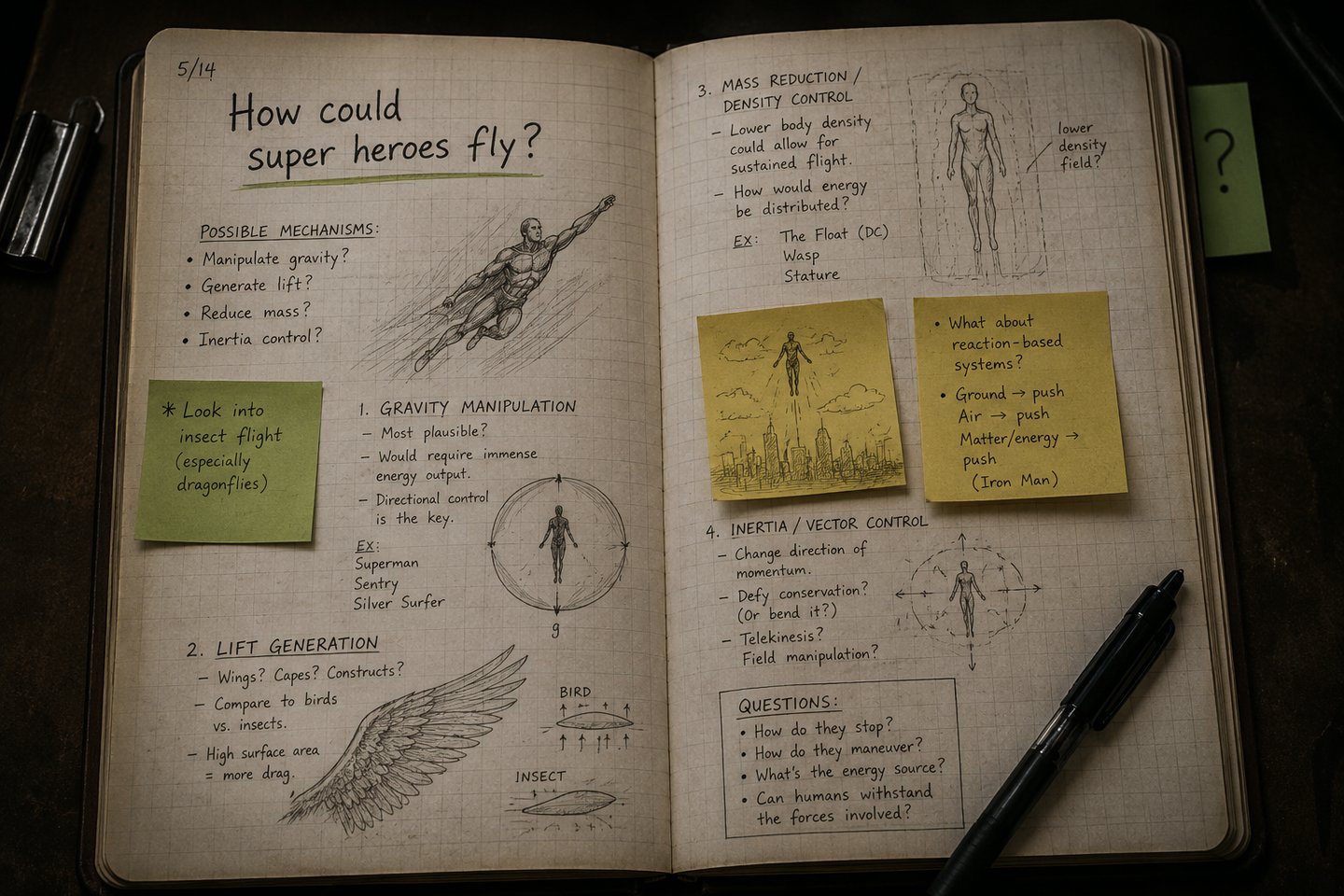
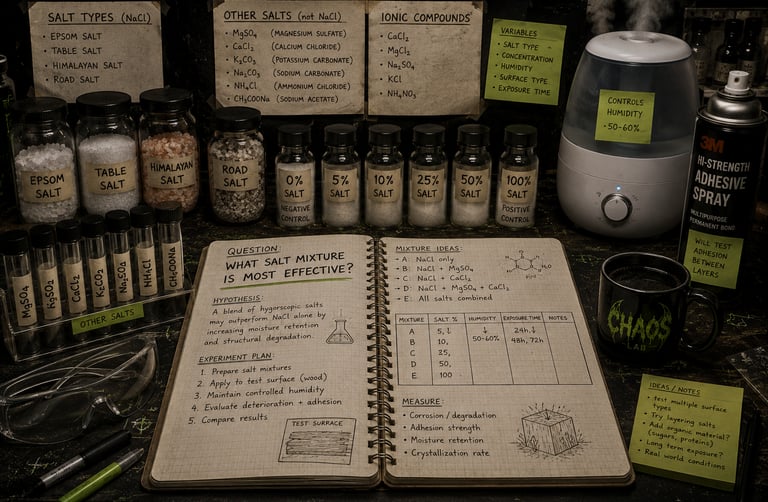
Eventually every scientist reaches the same conclusion: "Cool theory. How do we test it?" This course focuses on designing experiments, identifying variables, building controls, evaluating limitations, and understanding what an experiment is actually measuring. Whether you're investigating ghost deterrents, dragon physiology, superhuman healing, or alien ecosystems, you'll learn how to build scientifically sound experiments that could distinguish between competing explanations and strengthen or weaken a hypothesis.
Feral Science 502
Agent of CHAOS
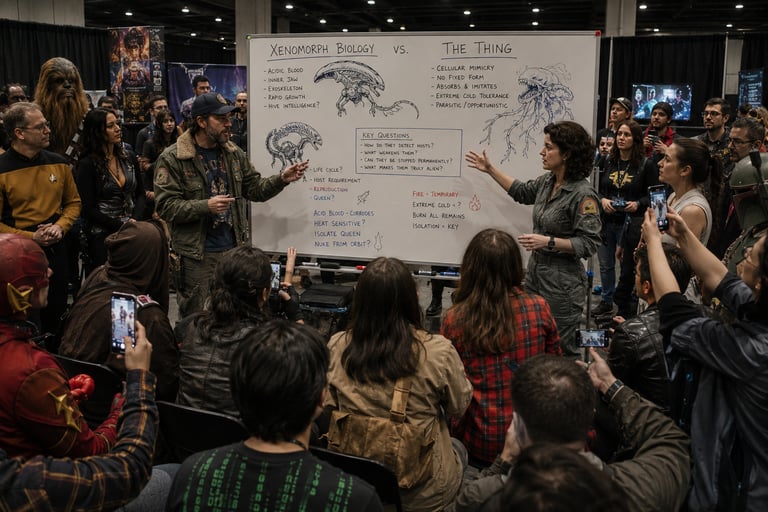
Having a brilliant idea is only half the battle. The other half is convincing other humans that you're not completely making things up. In this course, you'll learn how to explain complicated concepts without sounding like a textbook that gained sentience and chose violence. Through videos, articles, presentations, podcasts, social media content, or whatever communication medium best fits your particular brand of chaos, you'll learn how to make science understandable, engaging, and memorable without sacrificing accuracy. Because sometimes the most important scientific skill isn't making a discovery. It's convincing other people to care about it before they scroll away. Completion earns the title Agent of CHAOS.
Feral Science 501
Architect of CHAOS
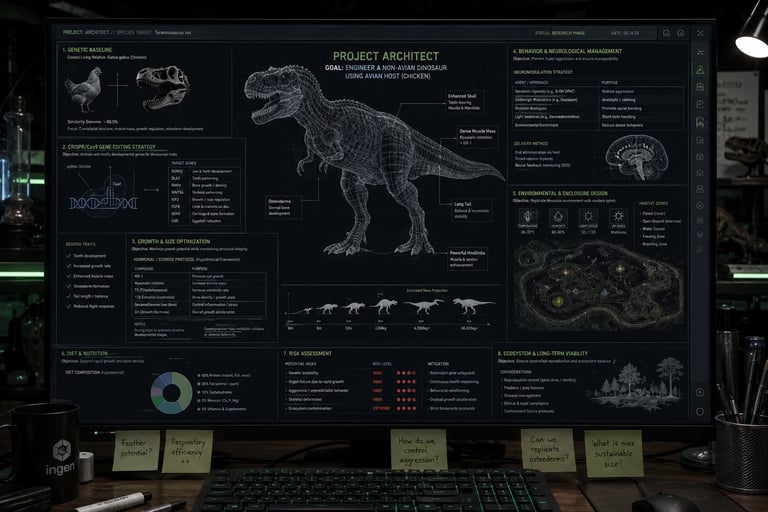
At some point, every fandom veteran decides they could build a better fictional system if somebody would just let them. This is your chance. Instead of taking apart someone else's world, you'll build your own and then figure out whether it can survive contact with logic. Design a cryptid, invent a supernatural organism, create a power system, engineer an alien ecosystem, build a containment protocol for eldritch horrors, or finally explain that idea you've been infodumping about to your friends for six years. The goal isn't realism. The goal is creating a system that doesn't immediately collapse under the weight of its own nonsense. Completion earns the title Architect of CHAOS.
Coming Soon...
The Washburn CHAOS Lab Certificate of Feral Science is currently under development and we're evaluating platform costs, content development time, community features, and overall program structure.
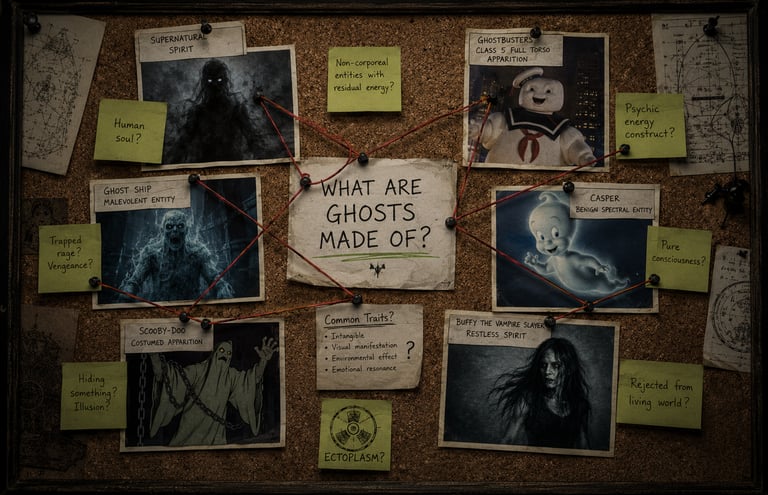
We're busy building lessons, projects, discussions, and structured opportunities for curious humans to ask increasingly dangerous questions about fictional worlds. Things like "Could superheroes actually fly?", "What are ghosts made of?", and "How many scientific laws has Jurassic Park violated this week?"
The interest form below helps us figure out whether we're the only people who think this sounds fun, what topics and fandoms people want to explore, and what a reasonable price point might look like when the program launches. If scientifically overanalyzing fictional worlds sounds like a good time, we'd love to hear from you.
Certificate of Feral Science Interest Form
Frequently asked questions
Is this an accredited certificate?
No. The Certificate of Feral Science is a community education program created by the Washburn CHAOS Lab. It is designed for learning, creativity, critical thinking, and scientific chaos, not college credit or professional certification.
Do I need a science background?
Not at all. The program is designed for curious humans, whether you're a scientist, student, teacher, writer, gamer, artist, engineer, fandom veteran, or somebody who just enjoys asking "Okay, but how would that actually work?"
Do I need to know the scientific method already?
Nope. Learning how scientific reasoning works is one of the main goals of the program. We'll start with the basics and build from there.
Is this only for students?
No. Anyone with an interest in science, storytelling, fandoms, worldbuilding, or critical thinking is welcome.
What kind of topics will be covered?
Almost anything is fair game. Movies, television shows, books, comics, video games, mythology, cryptids, monsters, superheroes, aliens, fantasy worlds, science fiction, horror, and other fictional systems may all appear as case studies for scientific investigation.
Will I need to pick a specific fandom?
No. Participants will be able to explore topics that interest them, and many activities can be adapted to different fandoms and fictional worlds.
Will the program be online?
That's the current plan. We're exploring options for course delivery, community discussions, live events, and other features as development continues.
How much will it cost?
We haven't determined final pricing yet. One purpose of the interest form is to help us understand what participants consider a reasonable price point so we can build a program that is both valuable and accessible.
When will the program launch?
We don't have an official launch date yet. The program is currently in development. Filling out the interest form is the best way to receive updates as the project progresses.
Why are you doing this?
Honestly? Because people keep asking for it. Over the years, we've discovered that a lot of people love science but don't always love the way science was taught to them. Maybe science class felt intimidating. Maybe it felt like memorizing vocabulary words for a test. Maybe somebody convinced you that science was only for geniuses, academics, or people with enough letters after their name to summon minor demons. It isn't.
Science is curiosity. It's asking questions. It's figuring out what you know, what you don't know, and how to tell the difference. The Certificate of Feral Science exists to show that anyone can learn to think like a scientist, and that learning those skills is a lot more fun when you're investigating ghosts, superheroes, dragons, alien invasions, and other fictional chaos instead of filling out a worksheet.
Will there be homework or grades?
Not in the traditional sense. The goal of the Certificate of Feral Science isn't to memorize facts, pass exams, or prove that you can survive multiple-choice questions. The goal is to practice scientific thinking. Most activities are project-based and designed around applying the concepts you're learning to questions, fandoms, and fictional worlds that interest you.
Evaluation is primarily based on completion and effort. Did you do the assignment? Did you include the required components? Did you support your reasoning? Did you create your own work instead of copying somebody else's? Congratulations. You're doing science.
You are encouraged to use resources. Books, articles, websites, documentaries, fandom wikis, the original source material, your friends, your parents, your local librarian, generative AI, or Bruce Campbell if you somehow have his phone number. Real scientists use resources all the time. Learning how to find information, evaluate it, and apply it appropriately is part of the process.
The goal isn't to know all the answers. The goal is learning how to ask good questions and build better explanations.
Washburn CHAOS Lab
Science is metal. Science is feral. Science is CHAOS.
director@washburnchaoslab.com
#washburnchaoslab
© 2025. All rights reserved.
complex host-abiotic systems
@washburnchaoslab
Feral scientists exploring hostile systems, unstable environments, and the chemistry shaping what survives there.
#feralscience