Lone Star Preserve
Bonnieville, Kentucky, USA
Why study Lone Star Preserve?
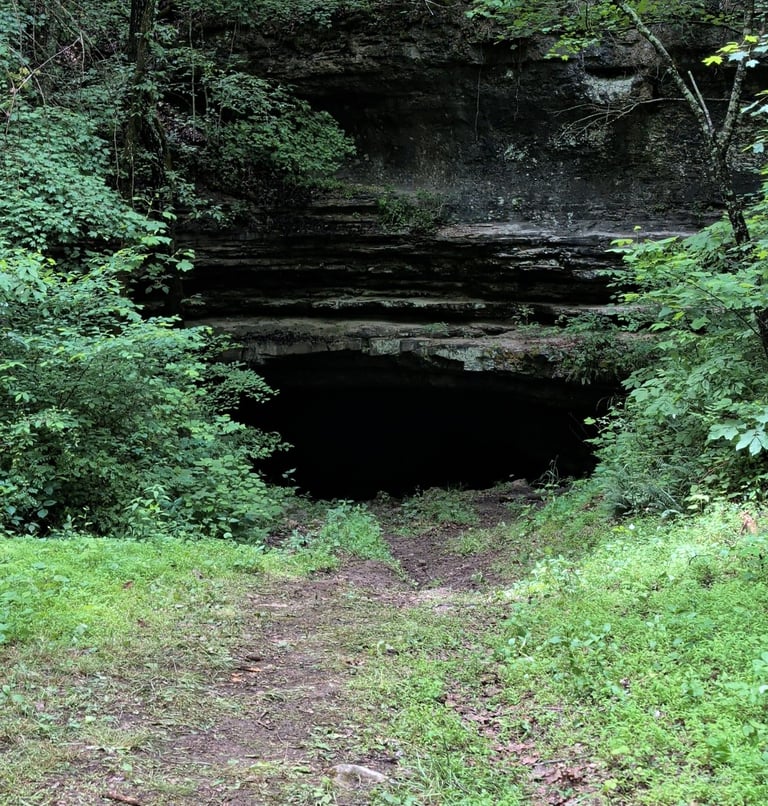
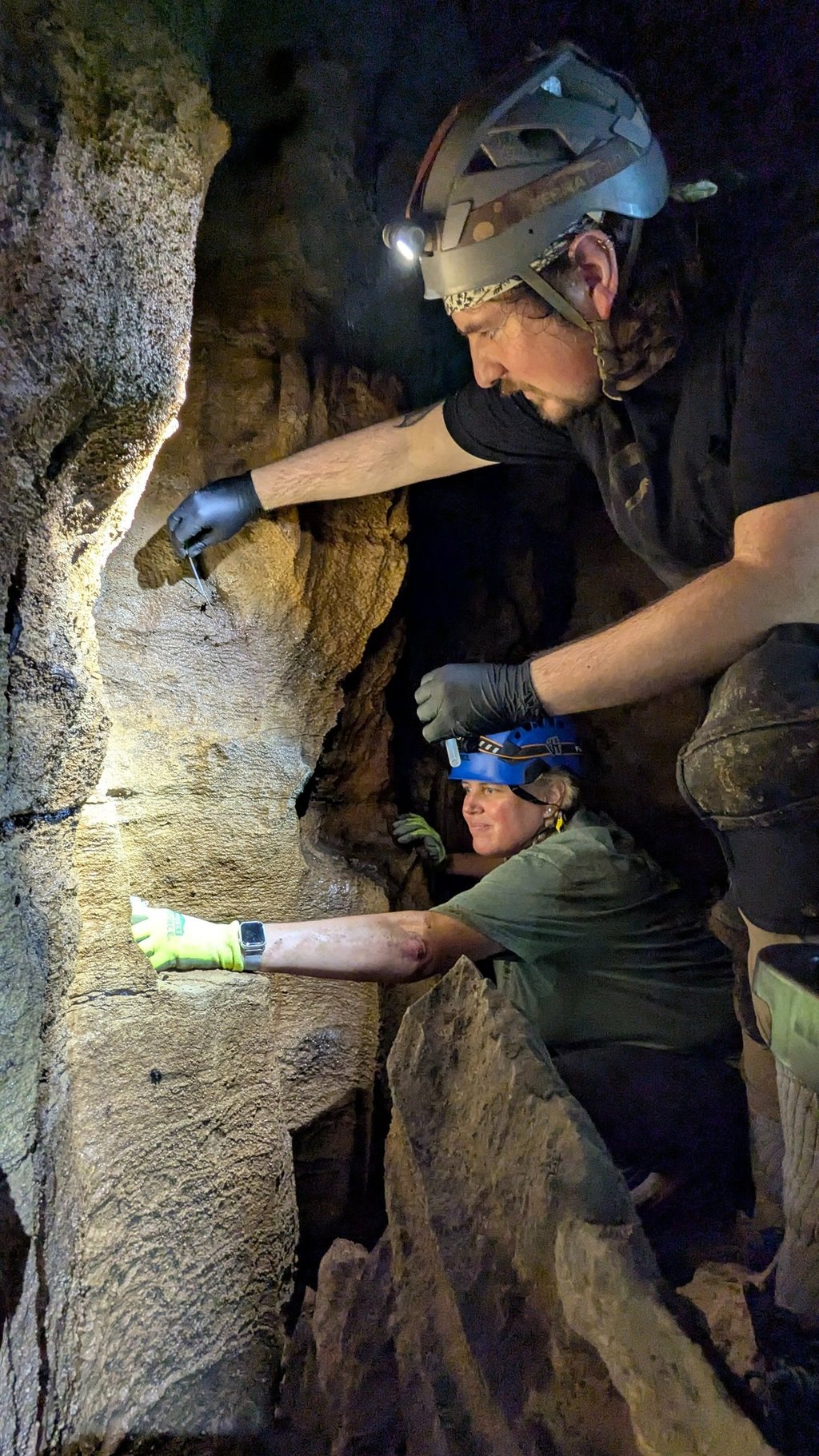
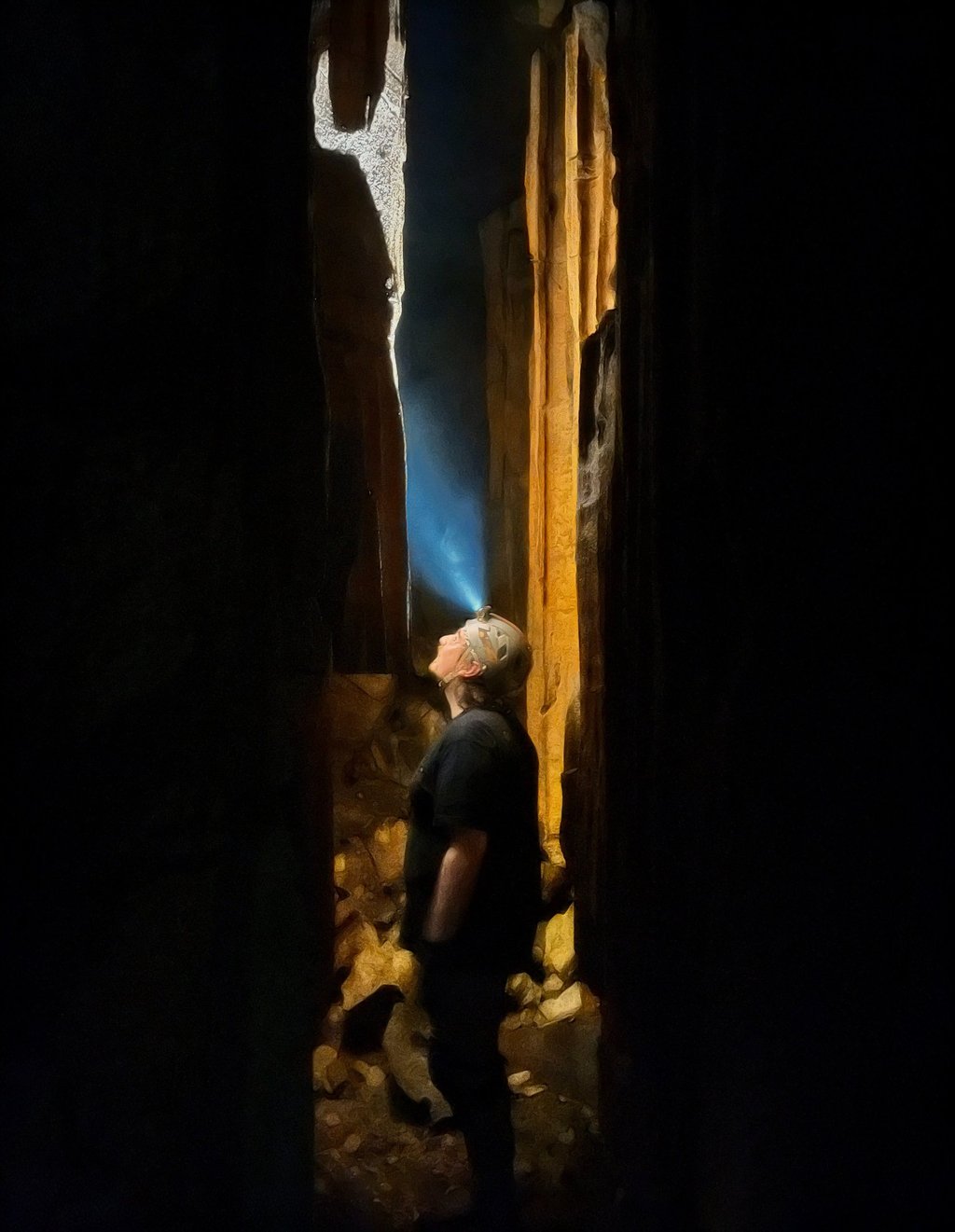
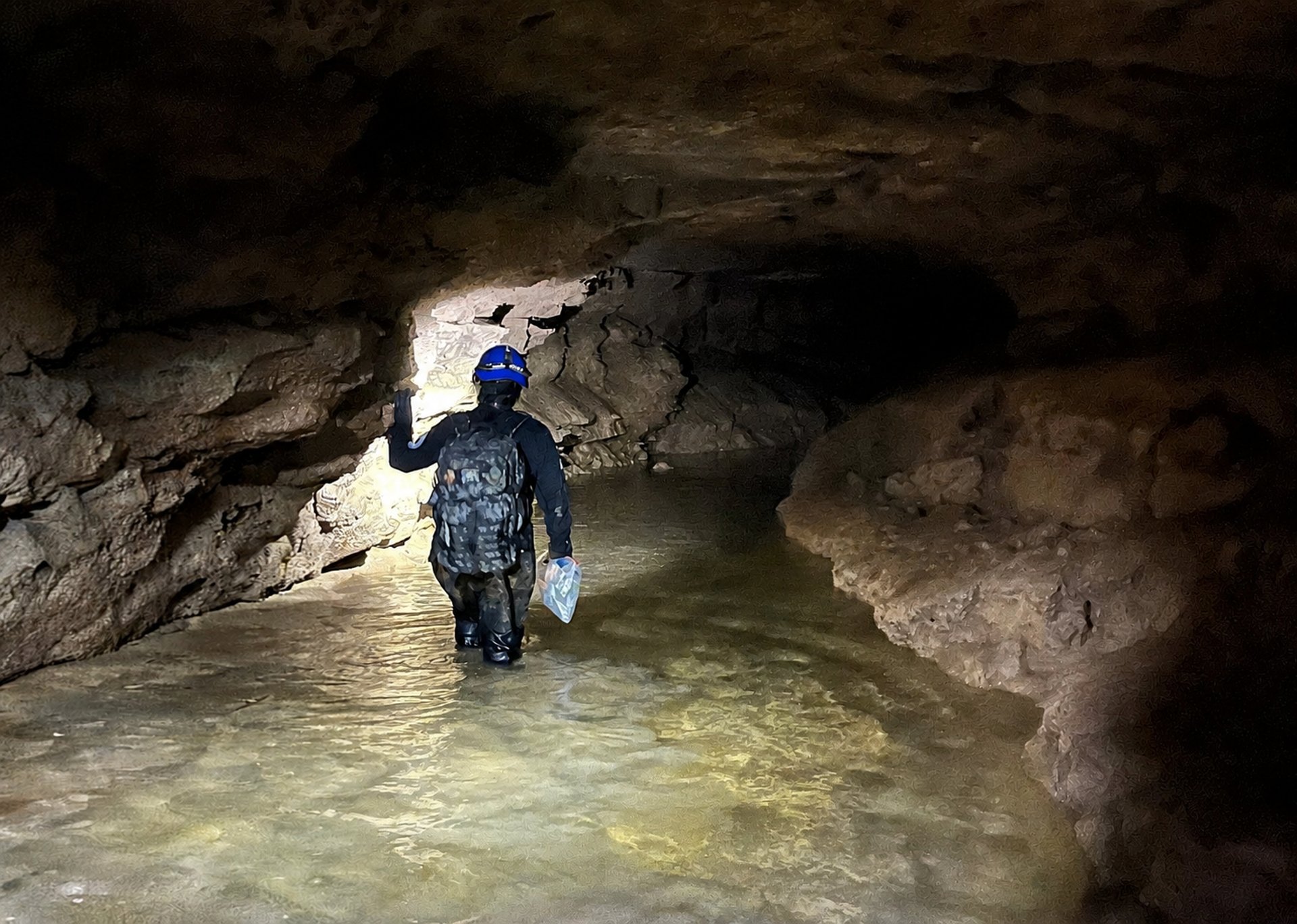
Lone Star Preserve, located in Bonnieville, Kentucky, is one of our core research locations because it isn't a single cave. It's a collection of caves developed within the same geologic formation, each one running under different conditions. Some are vertical, some are larger systems, all of them are active, and none of them are built for an audience. This isn't a show cave environment. It's a working cave landscape.
You don't get one system here. You get multiple. Separate caves, same geology, but different airflow, different water movement, different use, different outcomes. Some see regular caver traffic. Some don't. No permanent lights, no paved trails. Some have infrastructure, some don't. Just the system as it is. That's the point.
And access like this doesn't happen by default. The Louisville Grotto of the National Speleological Society manages this preserve with that in mind, and they've been a big part of making this work possible. They brought us in to do science here and they continue to back it. That matters. This kind of access isn't standard, and it's a big part of why the work coming out of this place holds up.

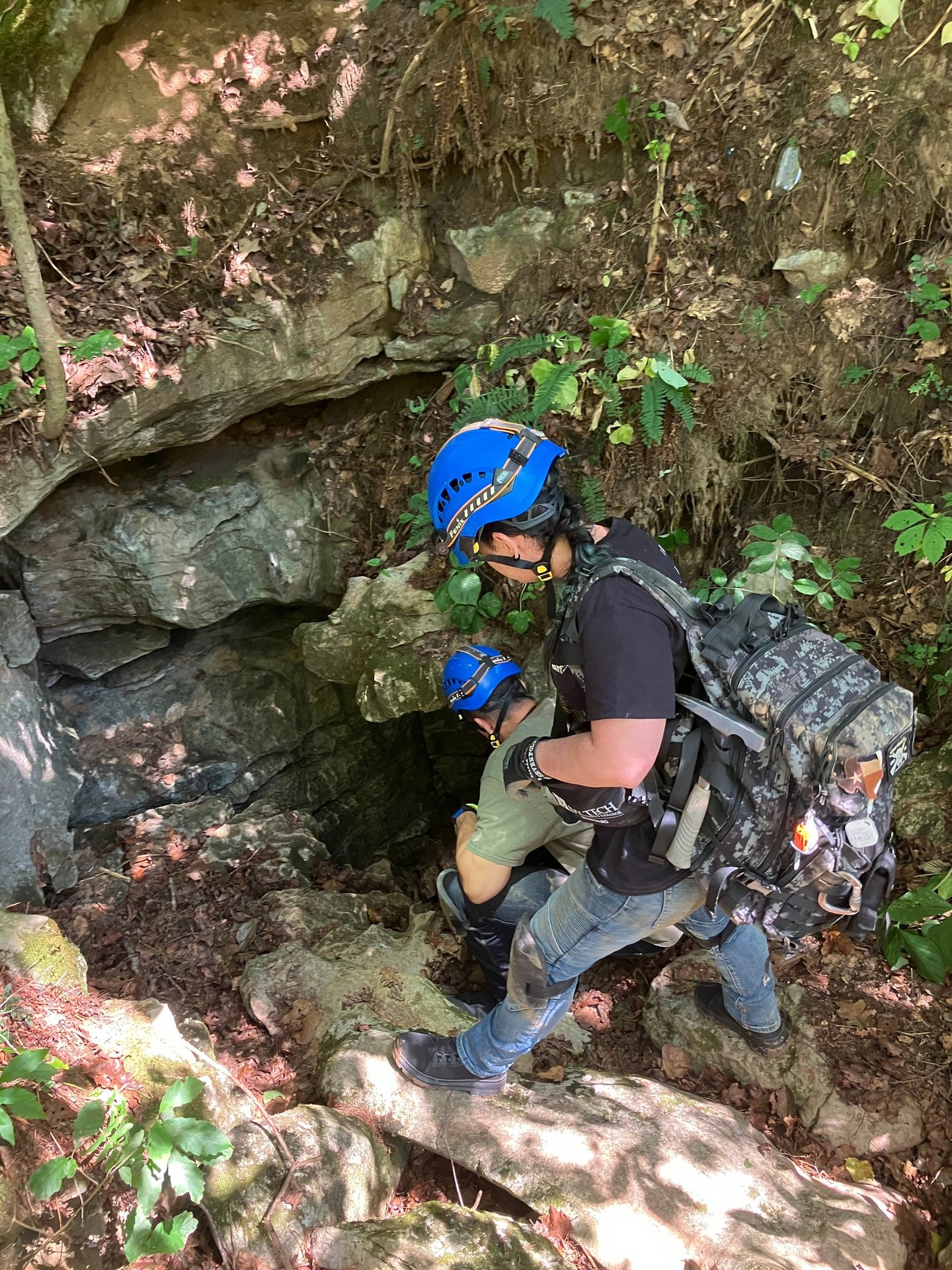
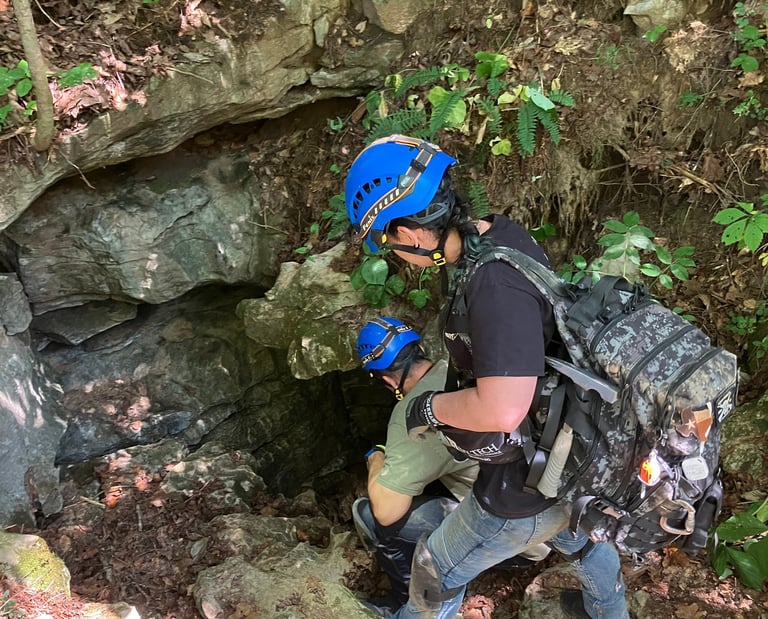
LSP_01_SC-BB Breakdown Base
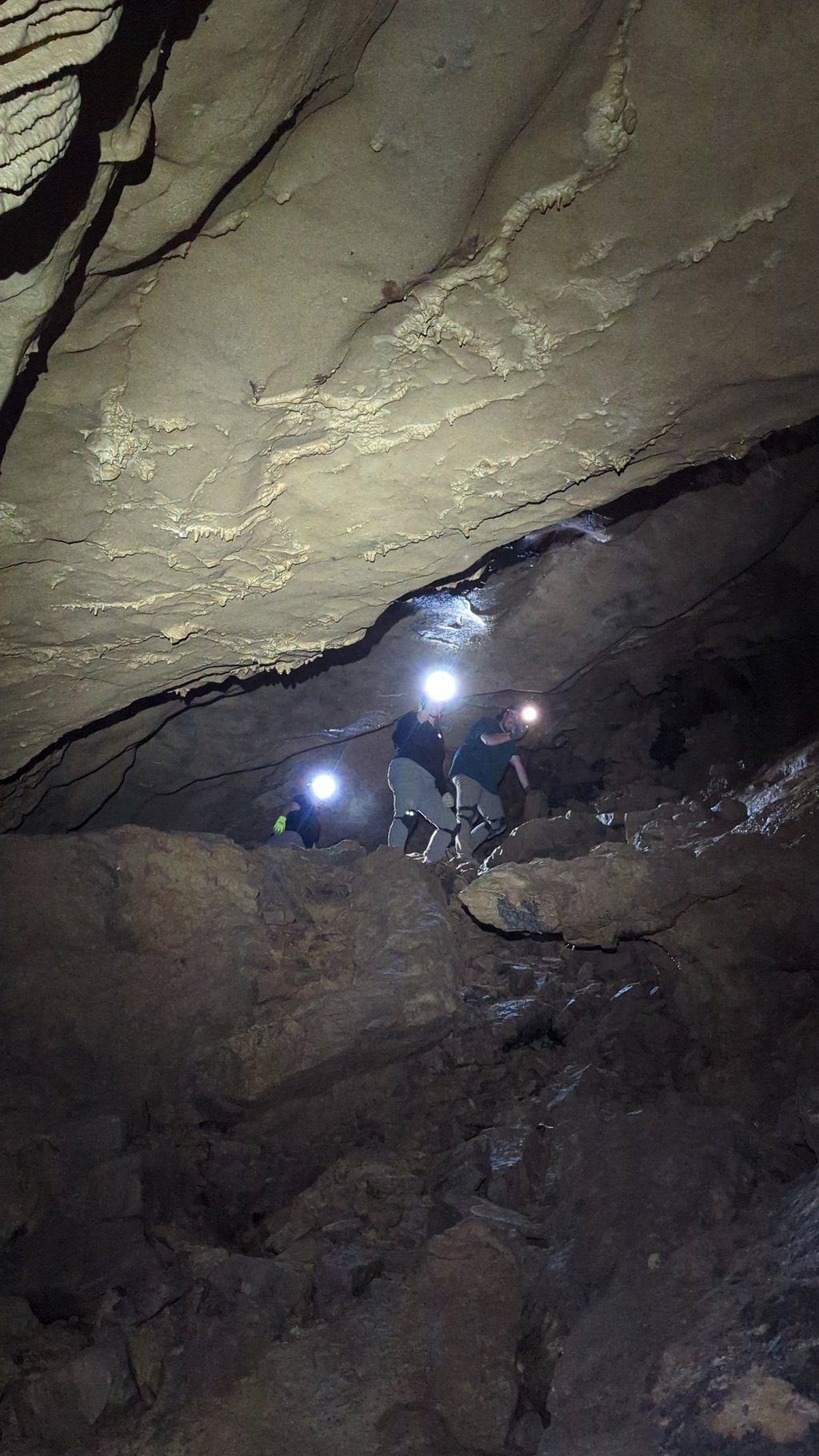
At some point, part of Saltpeter Cave decided gravity was the answer and collapsed into a massive pile of breakdown. We sampled at the bottom beneath a dripping speleothem to see how water moving through the cave shapes the microbes and chemistry where fresh rock is constantly being altered.
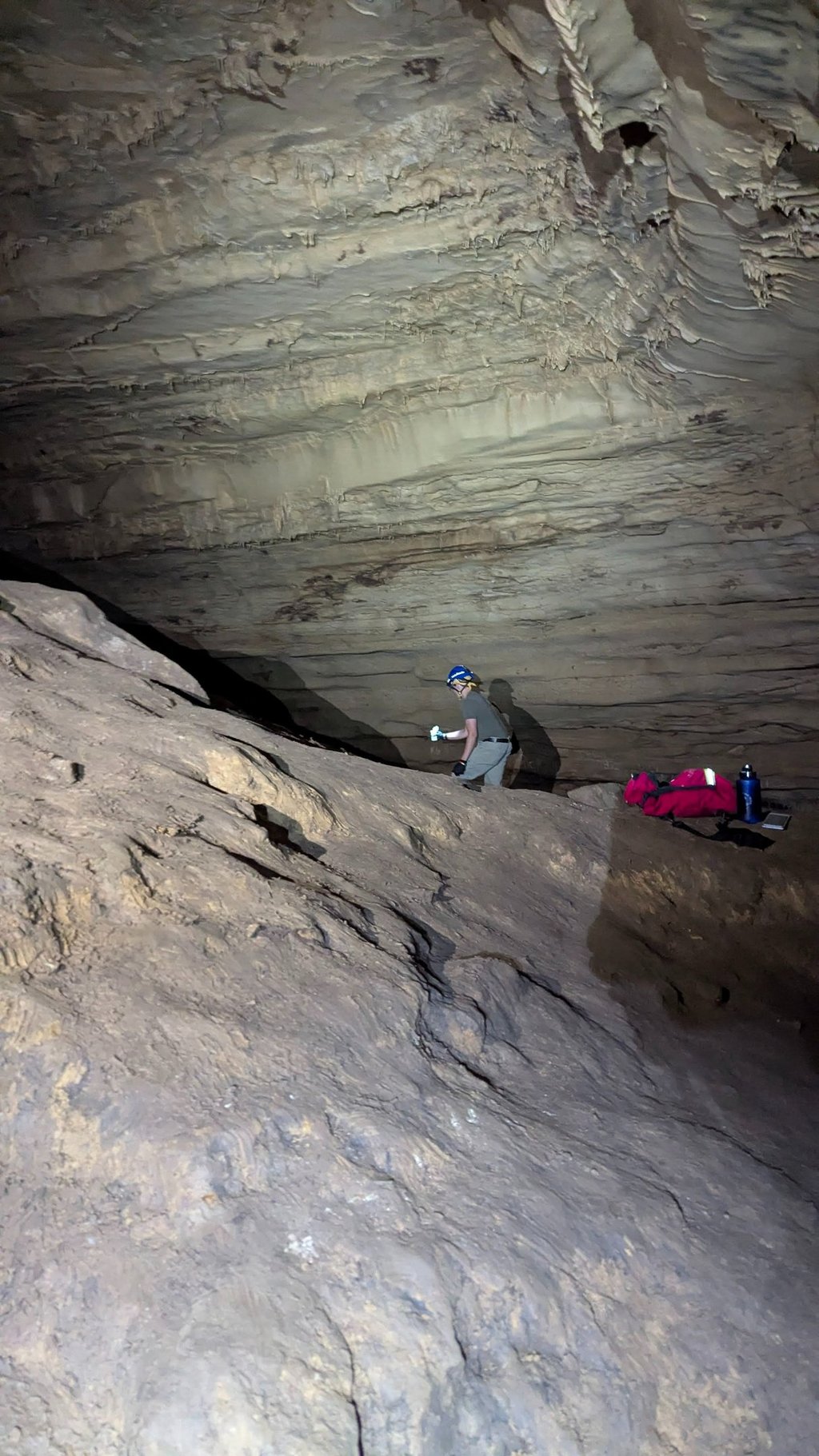

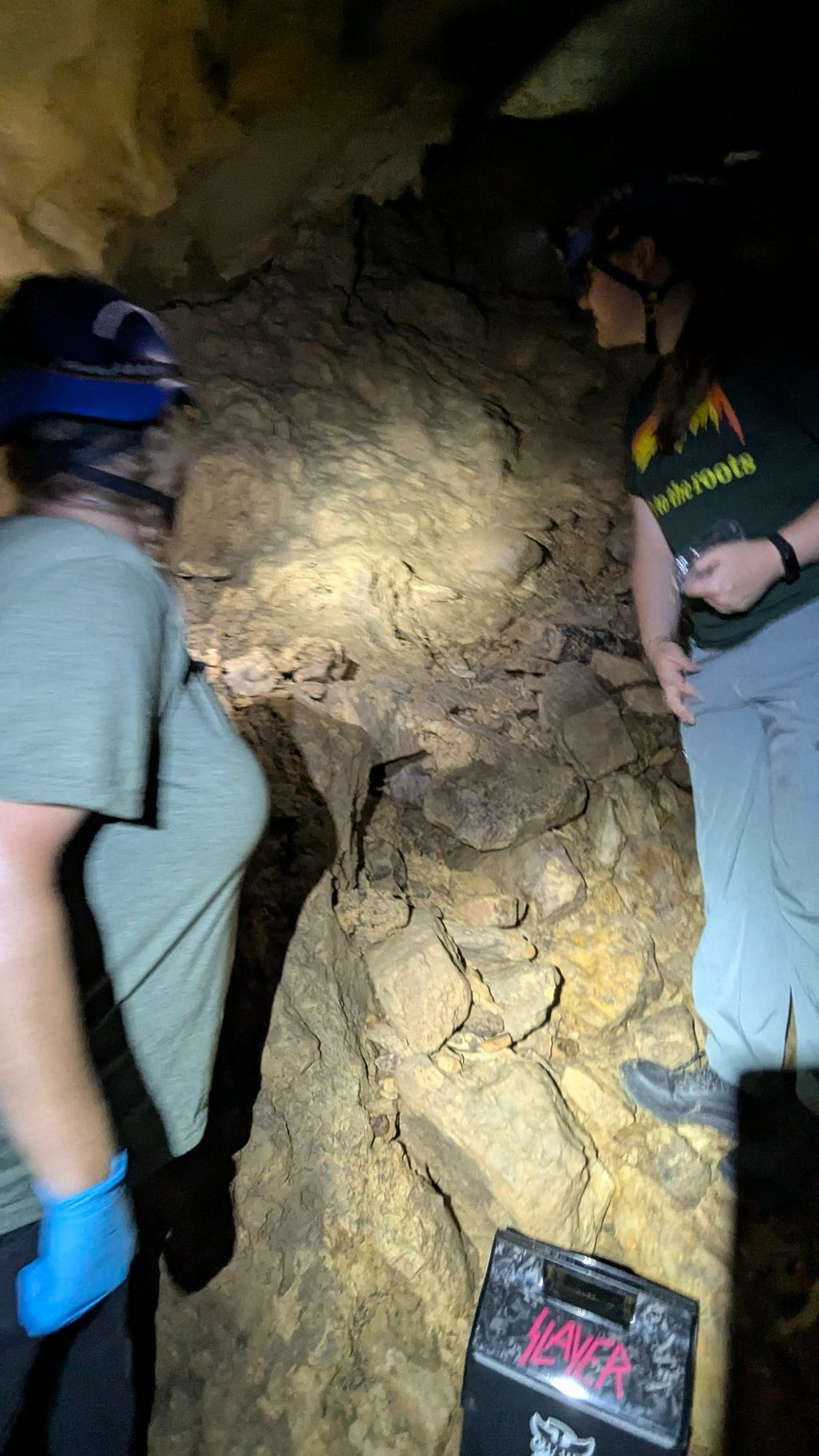

LSP_02_SC-BS Breakdown Summit
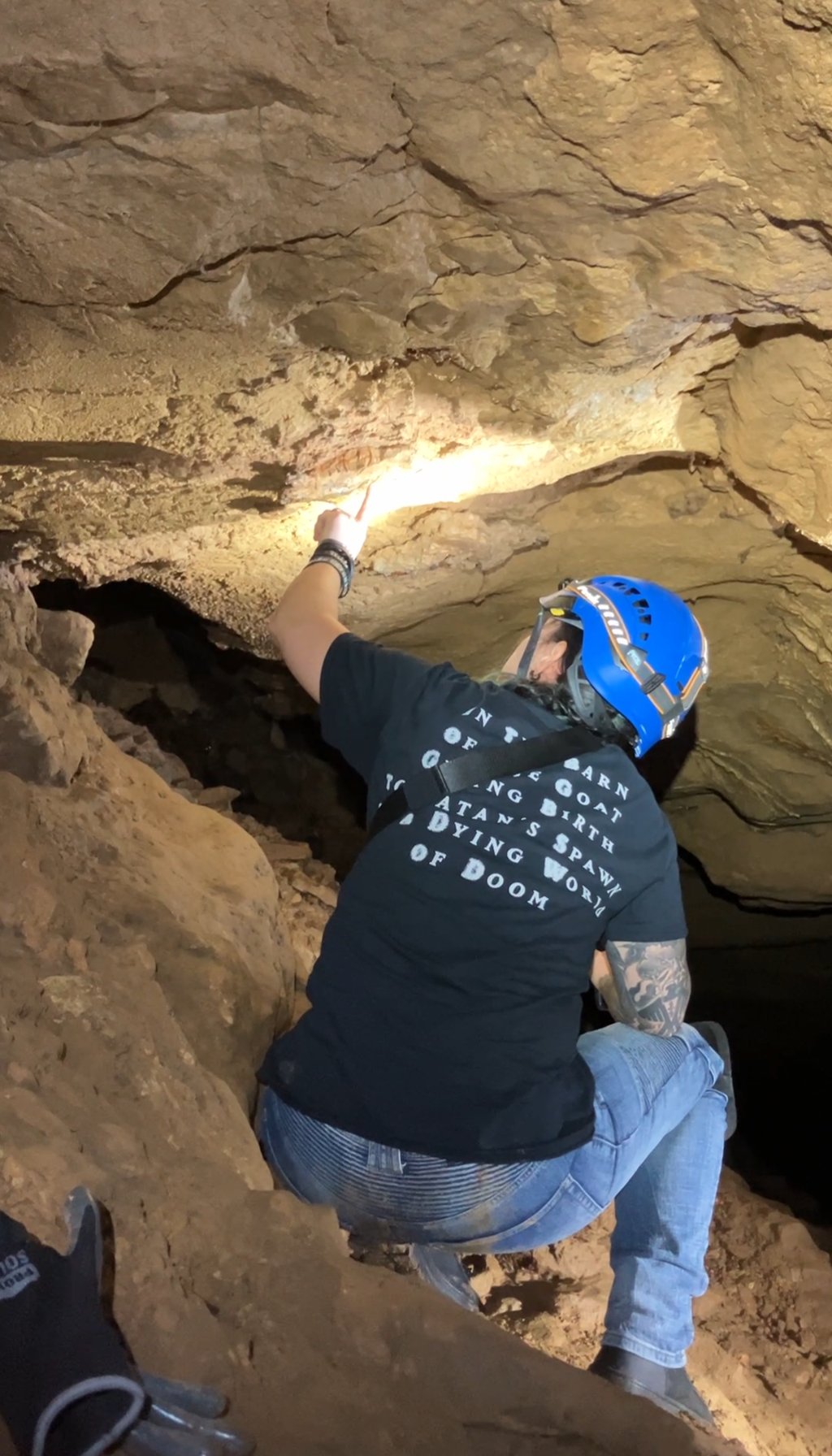
Naturally, we climbed all the way to the top of the breakdown. Strange red crusts covering the exposed wall made this too interesting to ignore, so we collected samples to figure out what they are and whether the microbes living there are just as unusual.


LSP_03_SC-BF Bridge Fungus
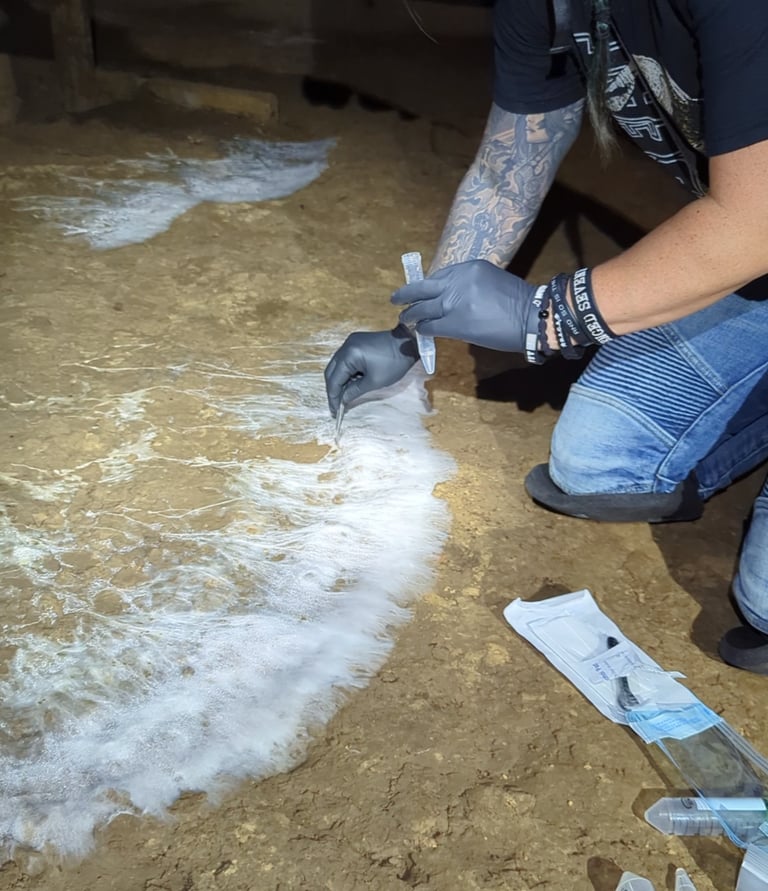
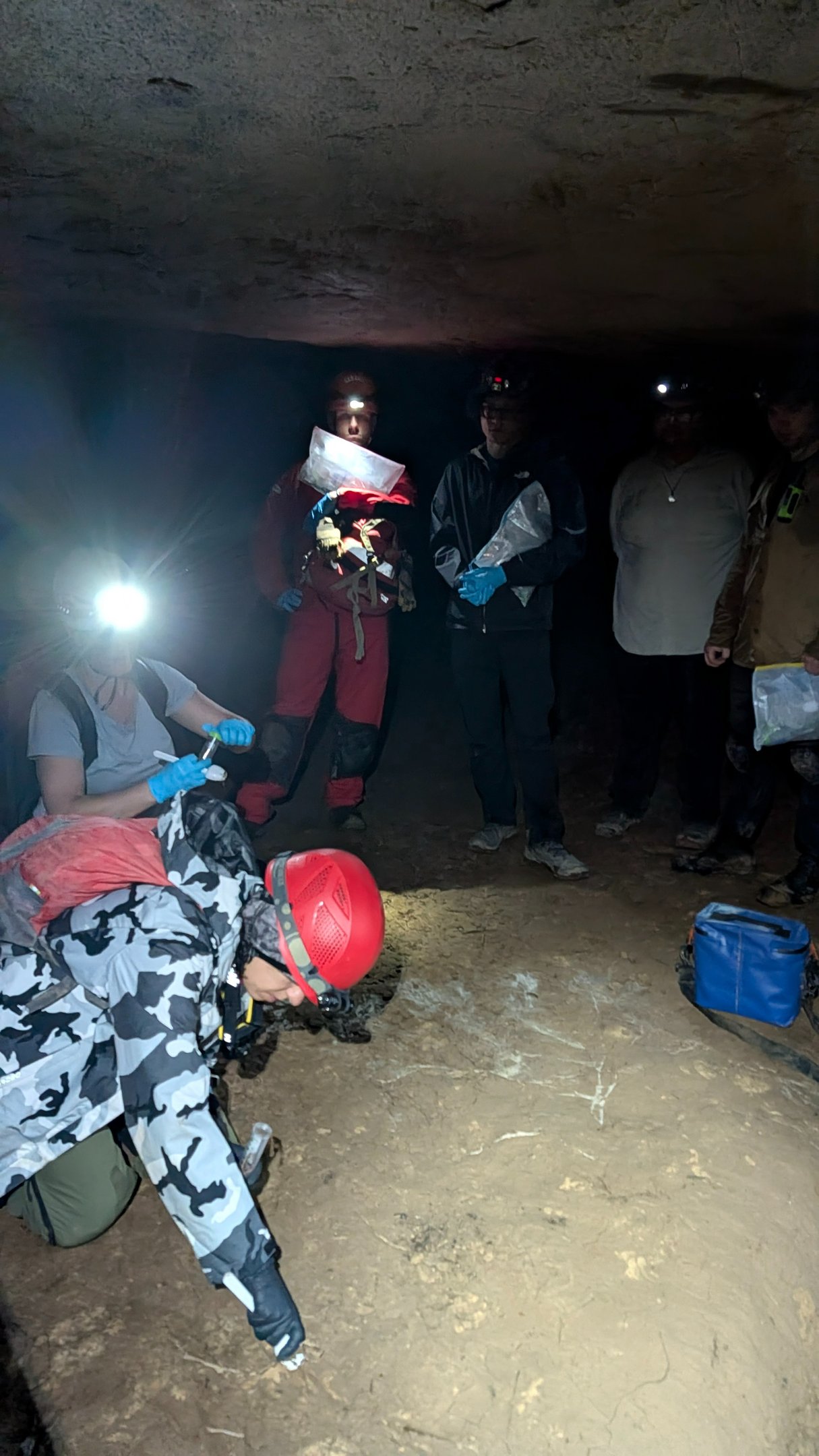
This enormous patch of white fungal mycelium was growing on wood beside the cave stream, which immediately earned it a sample. We also collected the sediment underneath to see what microbes are living alongside it and competing for the same resources.


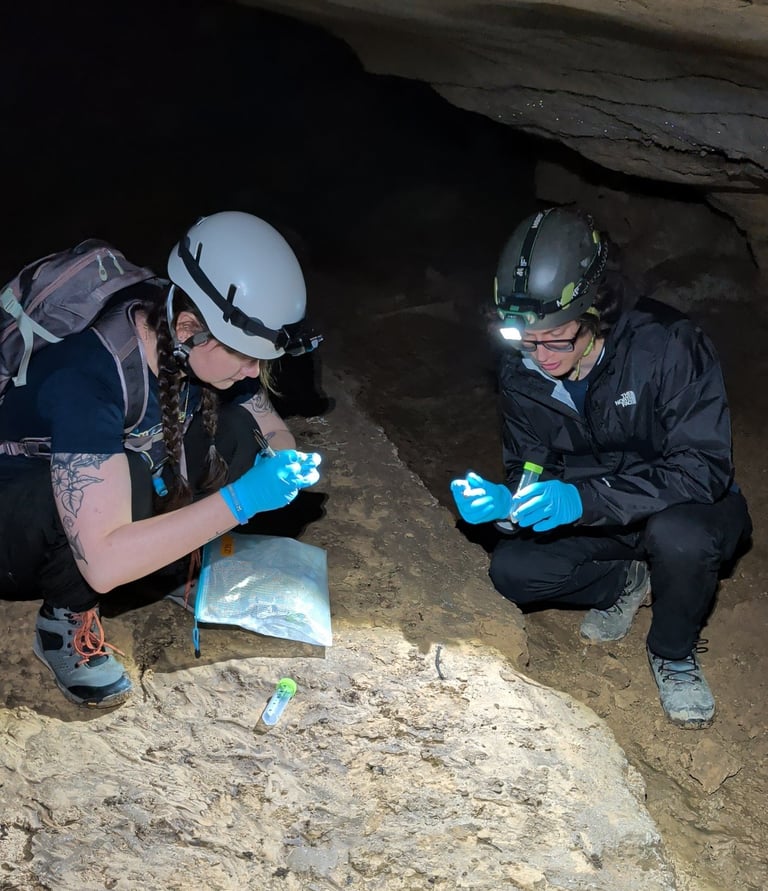
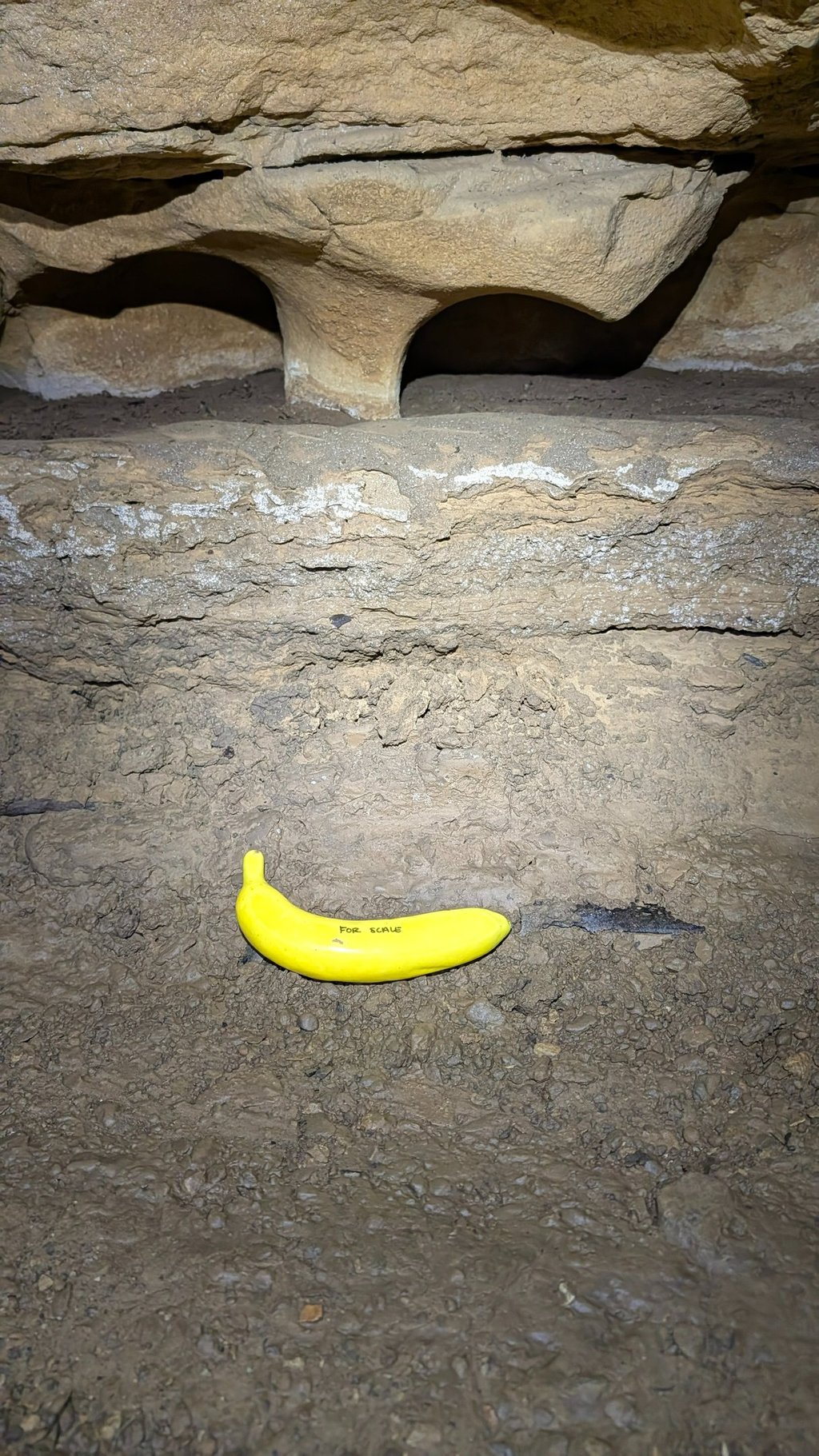
LSP_04_SC-WP White Power
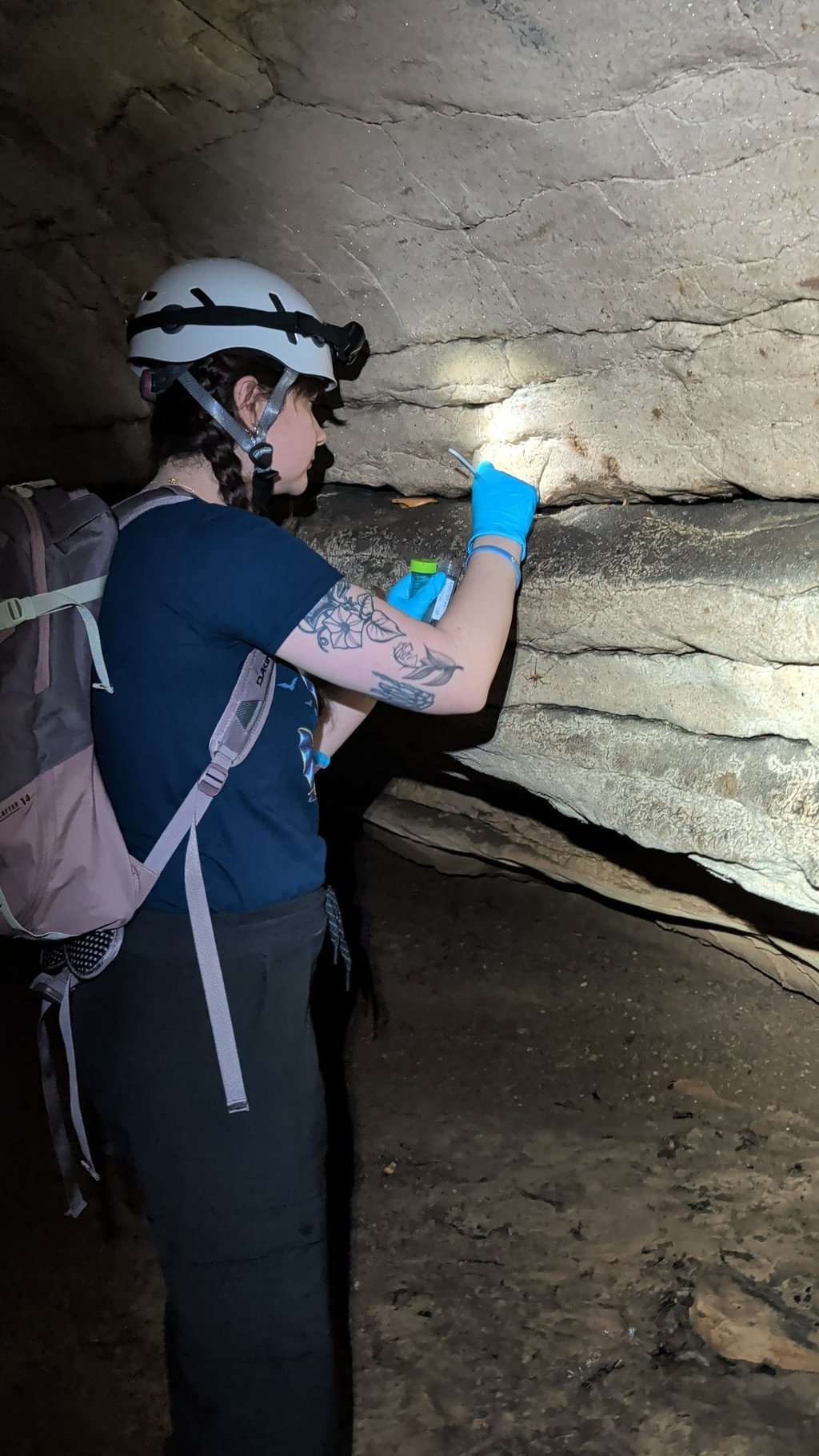
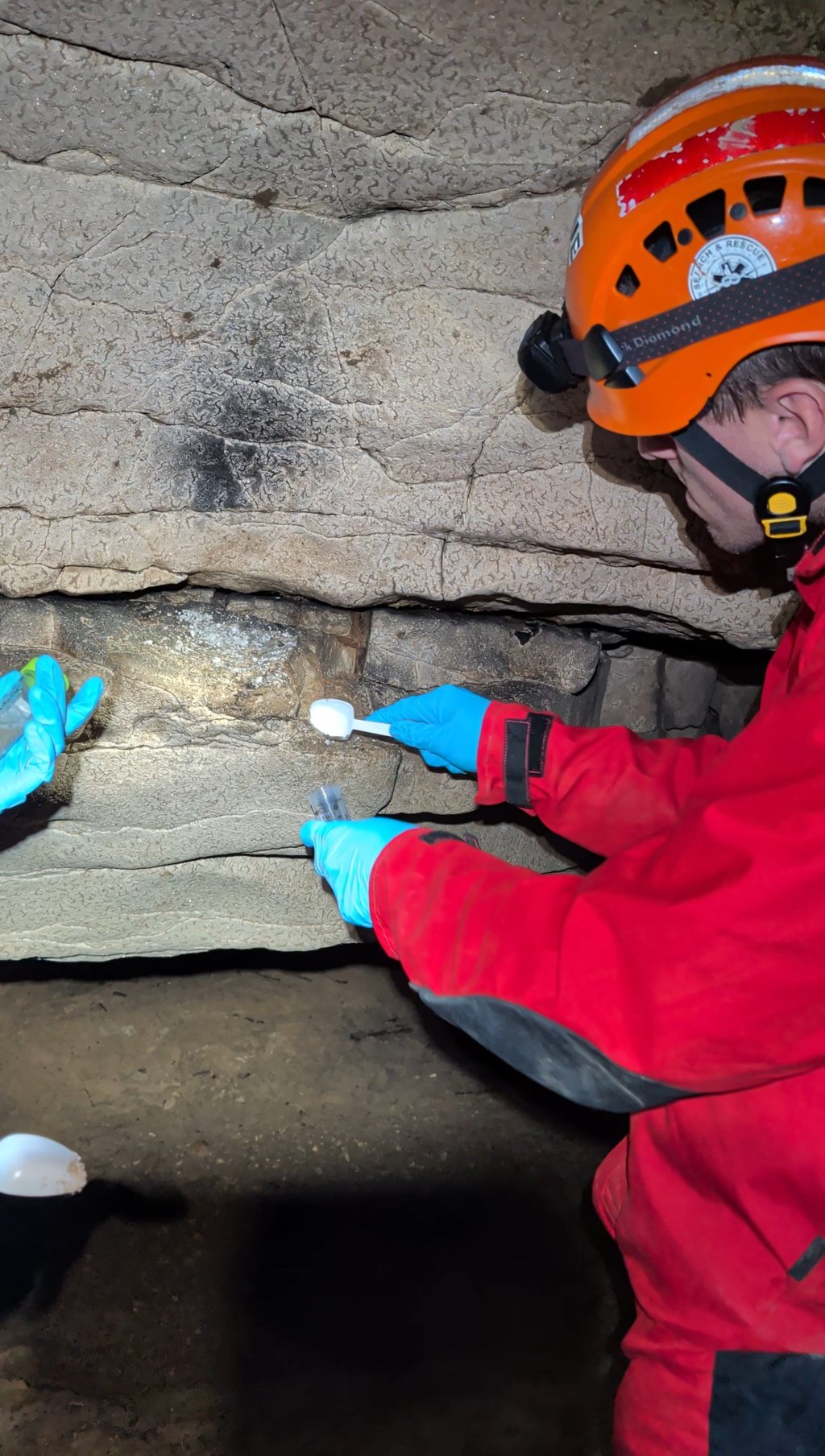
Our Speleofest Citizen Scientists found this weird white powder on the cave wall in Saltpeter Cave, and we couldn't confidently explain what it was. It came back to the lab with us, where we're working to figure out exactly what we're looking at.


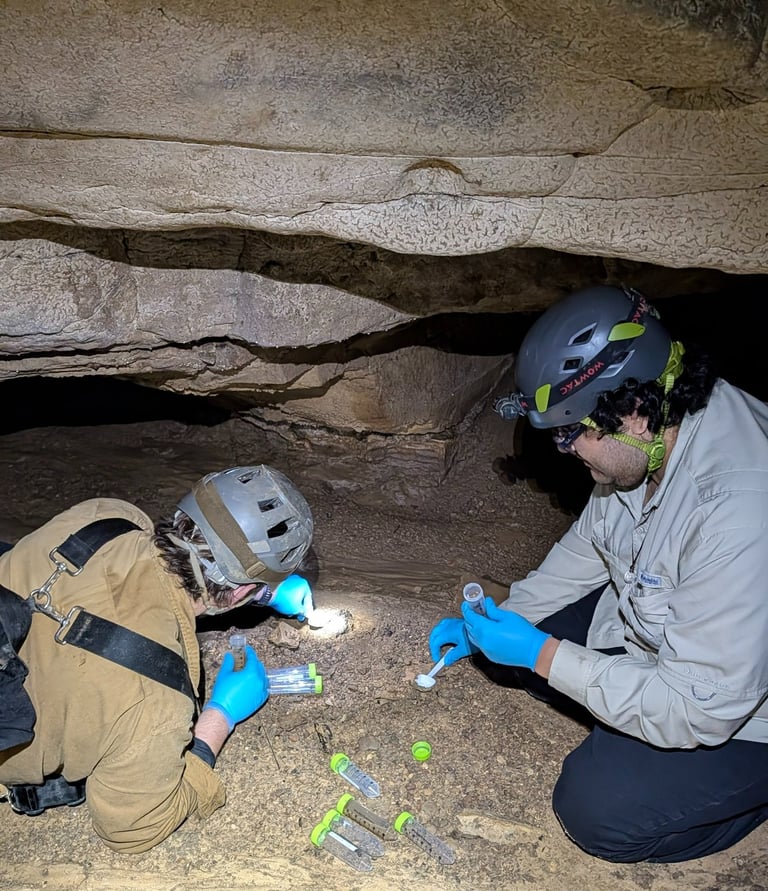
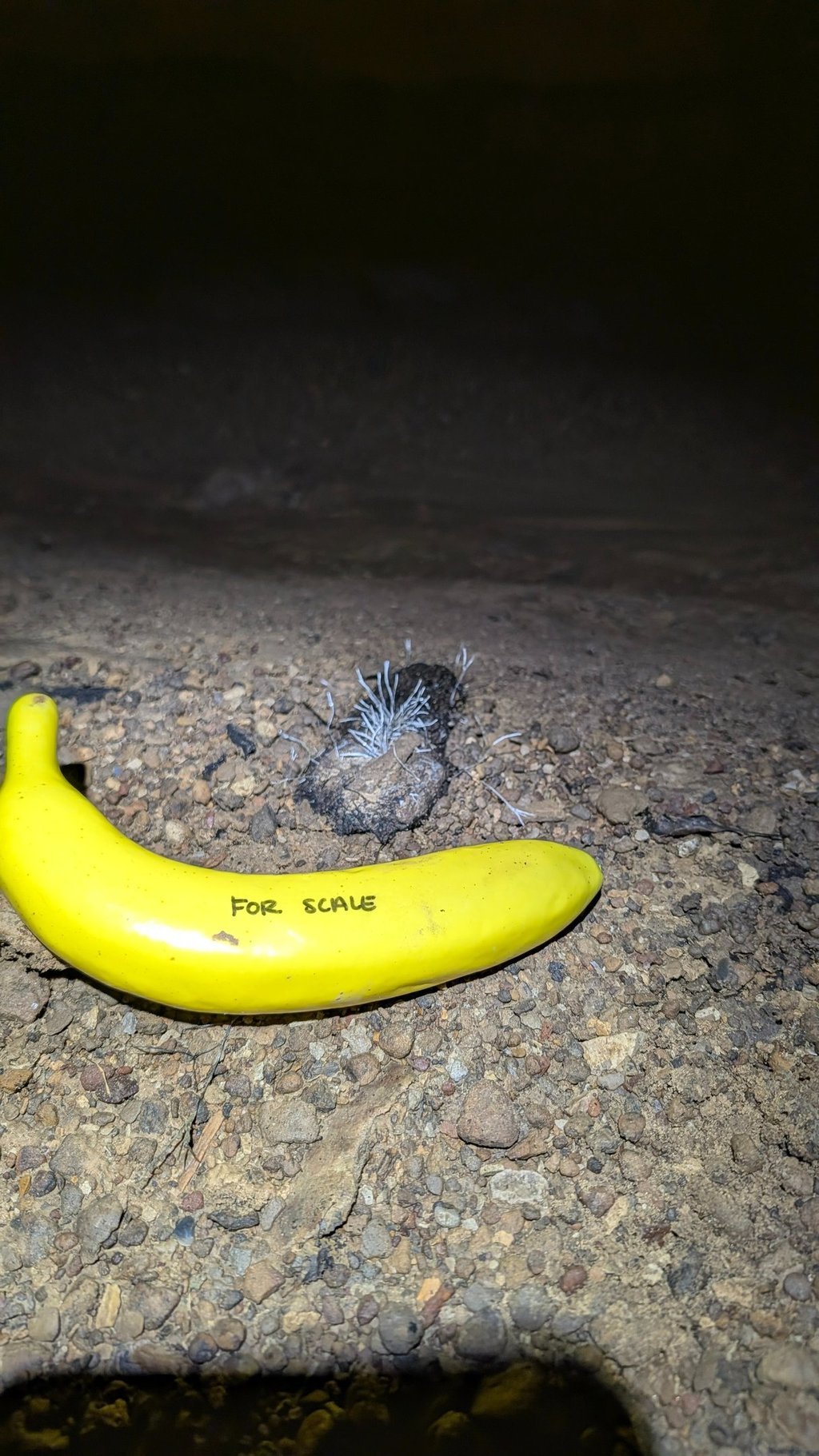
LSP_05_SC-SM Stalk Mycelium
Just down the passage from the white powder in Saltpeter Cave was this tiny white, grass-looking growth sticking out of the cave wall. We brought it back to the lab because none of us knew what it was, and “weird little cave grass” is not a satisfying identification.


LSP_06_SC-CG Cricket Guano
There were cave crickets everywhere, which also meant there was cave cricket poop everywhere. It might not be glamorous, but guano is basically the buffet line for cave microbes, so we collected samples to see who showed up.


LSP_07_BC-DS Bucket Cave
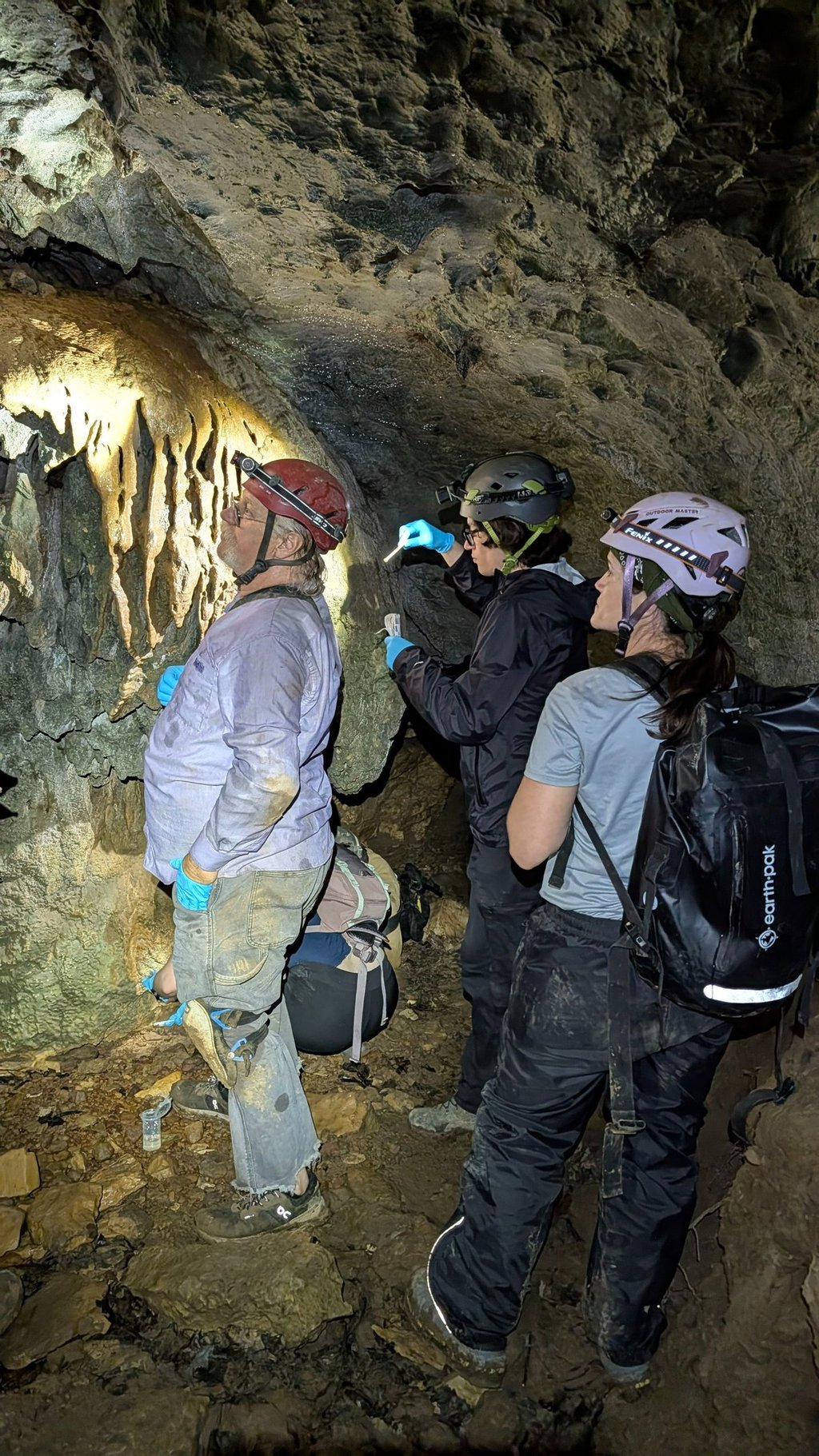
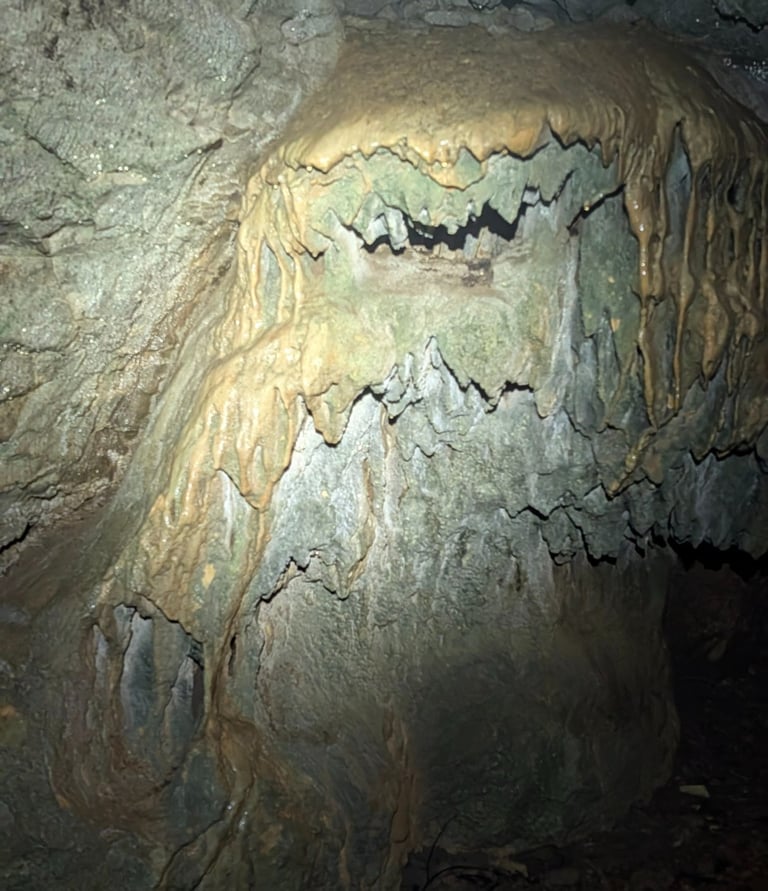
This beautiful flowstone is still actively growing as mineral-rich water drips over it. That constant drip changes both the rock and the sediment below, making it the perfect place to look at how cave chemistry and microbes interact.


LSP_08_BW-CS Buggy Wheel
Getting to this site meant crawling through one of the cricketiest passages we've ever been in. Somewhere along the way we also found the biggest cave cricket any of us had ever seen. The crawl was worth it, though, because quieter parts of caves often host microbial communities that are different from the more traveled passages.
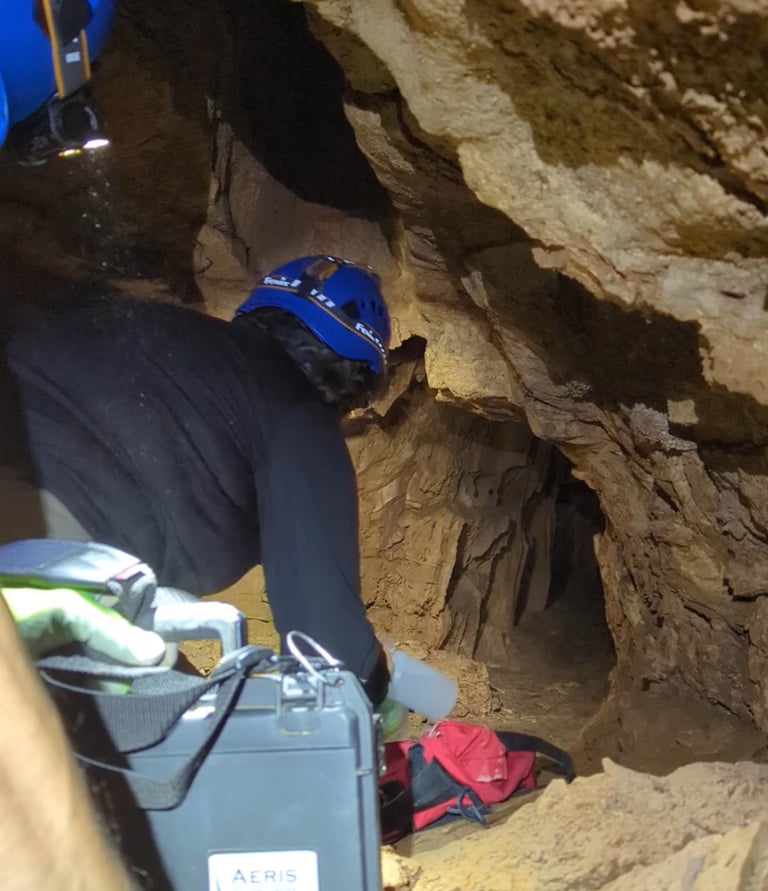

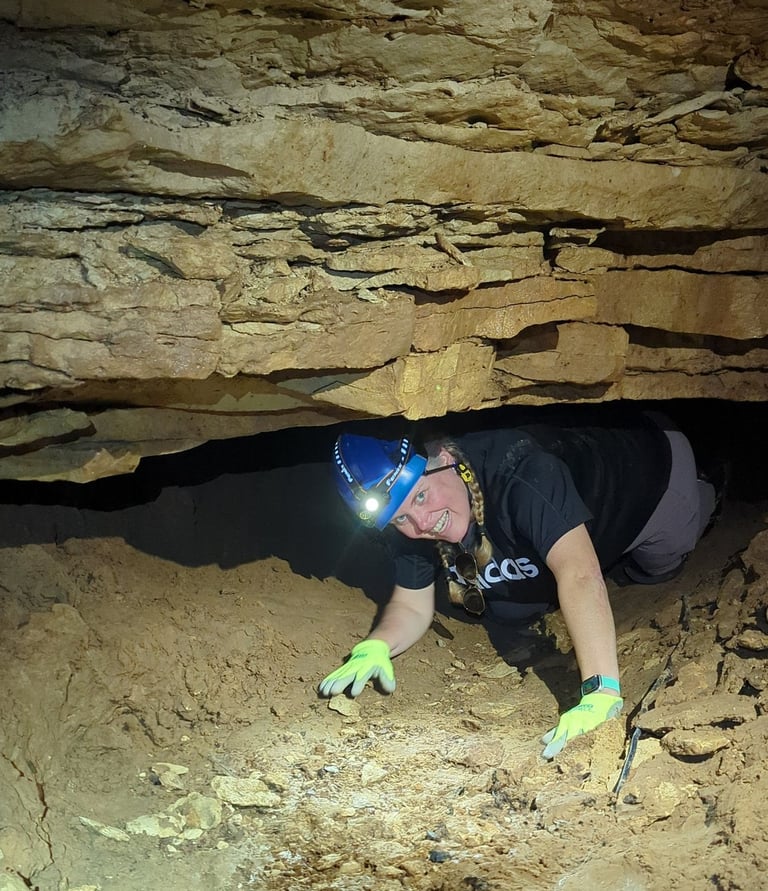

LSP_09_SP-SS Storage Pit
Storage Pit started with a climb down into the cave and immediately rewarded us with cave salamanders and another patch of white fungal mycelium growing on wood. Finding the same kind of fungal growth in multiple caves across the preserve made it an easy decision to sample here too.
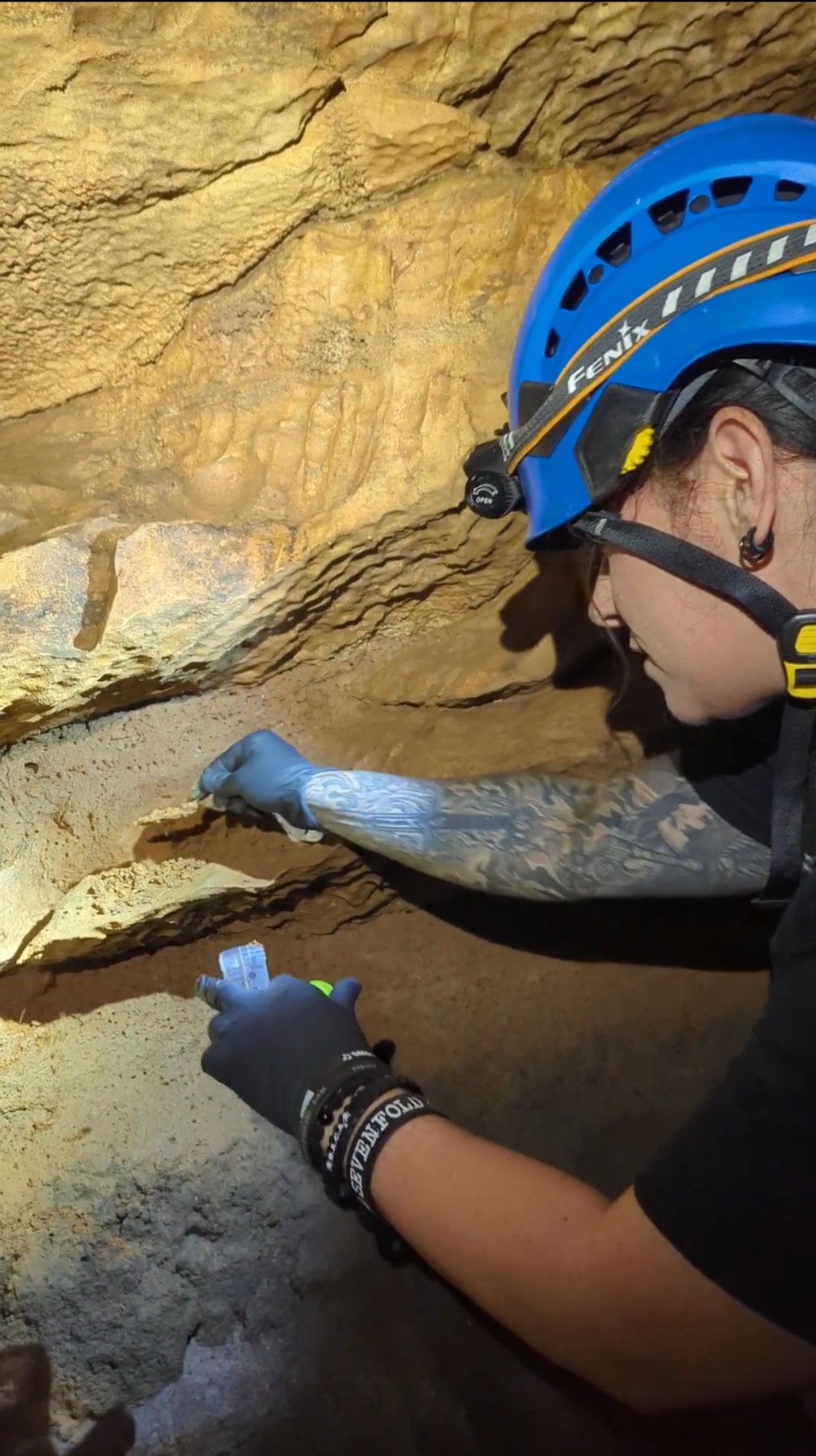

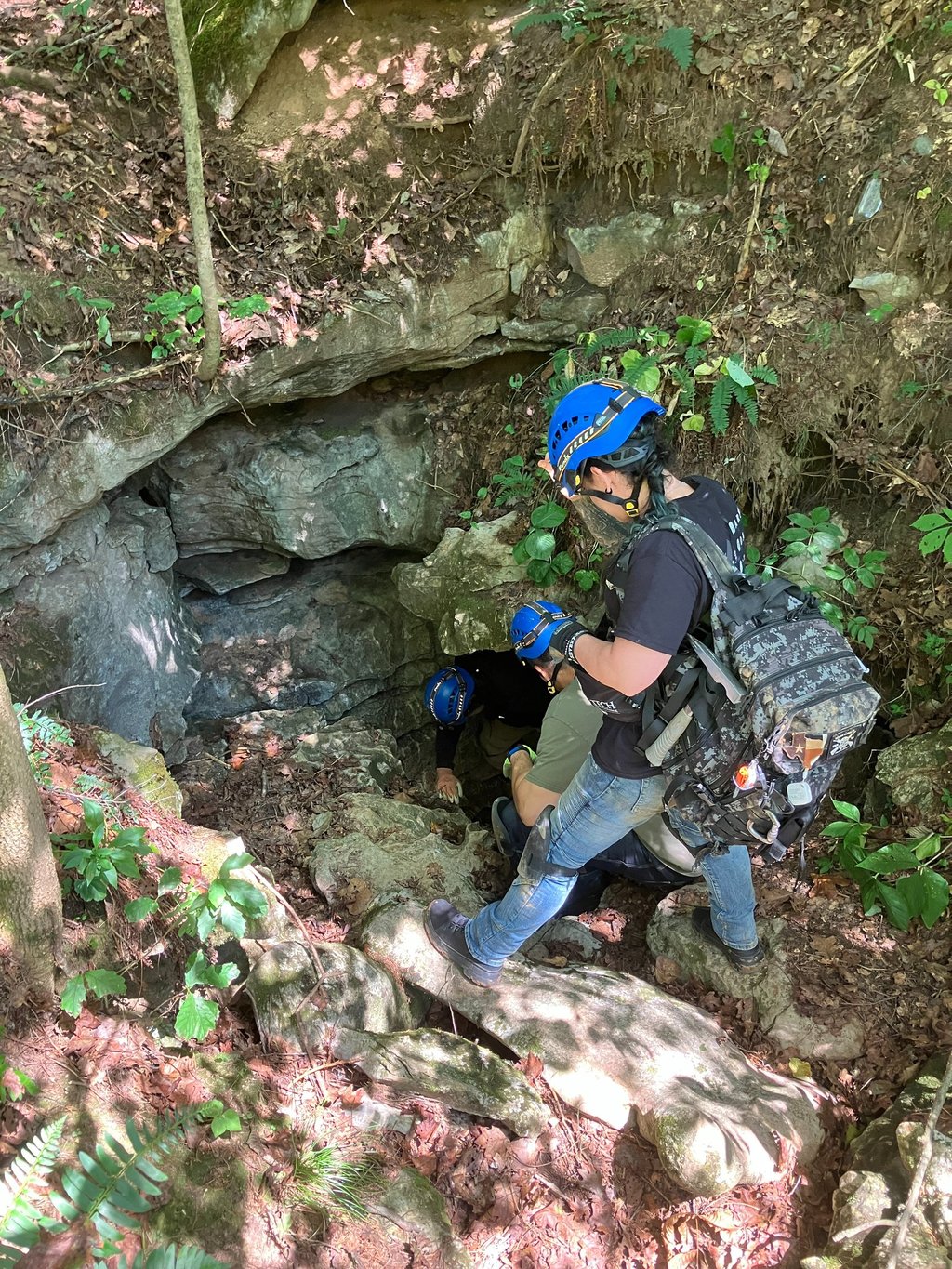

LSP_10_FFP-W Fractured Flute
Fractured Flute Pit was exactly what the name promised. After rappelling into the pit and climbing over to the sampling site, we collected samples from yet another very different cave environment to add to the preserve-wide picture.


Who Made This Possible
Access and Site Partners
Louisville Grotto
Nicholas Belen, Cave Guide
This work is not a single step and it is not a single person. It starts with people who make access possible, continues with those willing to get into the field and collect the samples, and runs all the way through the lab, the analysis, and the work required to turn raw material into something that holds up.
By the time you are looking at data, figures, or publications, it has already moved through a chain of people who showed up and did the work at every stage. We do not take that for granted. Thank you.
Washburn CHAOS Lab Members
Dr. Rachel Washburn, Director, Washburn CHAOS Lab
Dr. Alex Washburn, Geochemist, CONAN Division, KGS
Victoria Apostolides, Student Volunteer Researcher, Appalachian State
Laura Hamann, Citizen Scientist
Field Sampling
Victoria Apostolides, Student Volunteer Researcher, Appalachian State
Nicholas Baughman, Citizen Scientist, Speleofest 2026
Nicholas Belen, Cave Guide, Louisville Grotto
Uriel Diaz, Citizen Scientist, Speleofest 2026
Finley Gardner, Potter Intern 2025, KGS
Laura Hamann, Citizen Scientist
Jessica Harrison, Citizen Scientist, Speleofest 2026
Madison High, Geologist I, KGS
Hala Ison, Potter Intern 2025, KGS
Jack Lustro, Citizen Scientist, Speleofest 2026
Maddie Parker, Potter Intern 2025, KGS
Kimberley Richards Woolen, Citizen Scientist, Speleofest 2026
Gordon Sachtjen, Citizen Scientist, Speleofest 2026
Nicholas Saveas, Citizen Scientist, Speleofest 2026
June Stone, Potter Intern 2025, KGS
Allee Wasiak, Citizen Scientist, Speleofest 2026
Emmerson Willhoite, Potter Intern 2025, KGS
Sample Analyses Collaborators
Jason Backus, Laboratory Manager, KGS
Andrea Conner, Laboratory Analyst, KGS
Sahar Mofidi, Graduate Student, Tidgewell Lab, University of Kentucky
Funding and Sponsorship
University of Kentucky OVPR Postdoctoral Research Fellowship
KGS Enrichment Fund
Photography, Videography, and Imaging
Nicholas Belen, Cave Guide, Louisville Grotto
Laura Hamann, Citizen Scientist
Dr. Alex Washburn, Geologist III, KGS
Dr. Rachel Washburn, Director, Washburn CHAOS Lab
Get in touch
If you have questions about this system, start there. If you want to get involved, use these data as a starting point, get access to raw datasets, collaborate, have us collect samples, or come in and run your own study, this is where that happens. This work is open to people who are actually going to do something with it. The form is below.
Washburn CHAOS Lab
Science is metal. Science is feral. Science is CHAOS.
director@washburnchaoslab.com
#washburnchaoslab
© 2025. All rights reserved.
complex host-abiotic systems
@washburnchaoslab
Feral scientists exploring hostile systems, unstable environments, and the chemistry shaping what survives there.
#feralscience