
Speleofest 2026 Citizen Science Experience
The first CHAOS Lab Citizen Science Experience at Speleofest 2026 involved cave mud, microbial swabs, atmospheric measurements, suspicious quantities of tube labeling, and actual scientific data collection. The samples are headed to the lab, the volunteers are headed into our acknowledgments sections, and the microbes are probably still plotting something underground.
CITIZEN SCIENCE EXPERIENCESPELEOFESTLOUISVILLE GROTTOLONE STAR PRESERVECAVE & KARSTFIELD WORKCITIZEN SCIENCE
Dr. Rachel Washburn
5/26/20264 min read
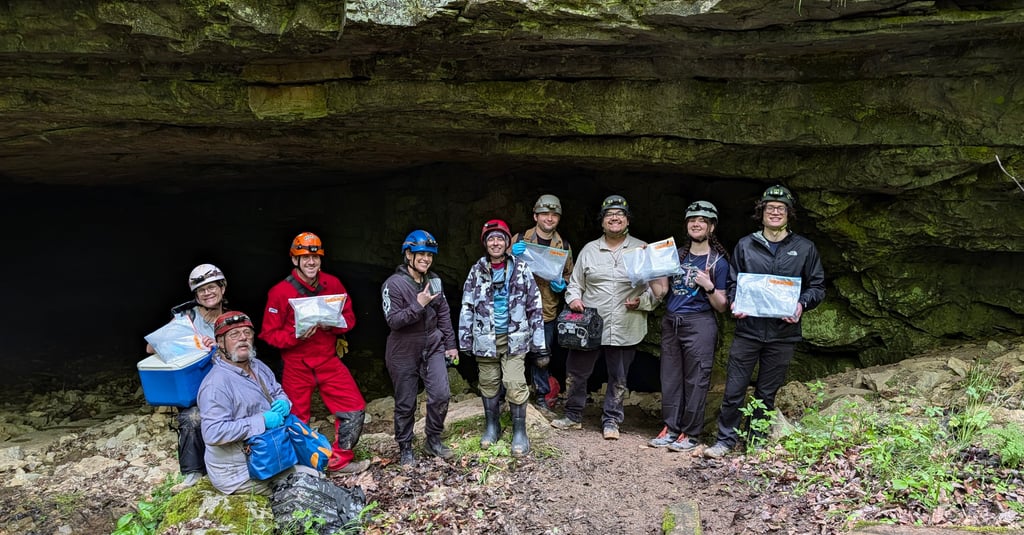
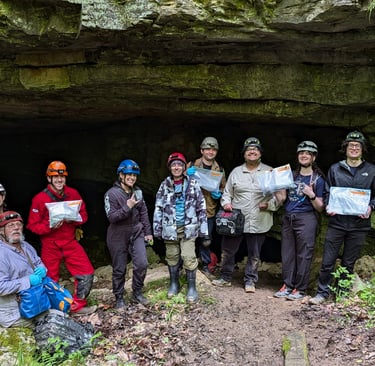
Our Speleofest 2026 Citizen Scientists: Jessica Harrison, Gordon Sachtjen, Nicholas Baughman, Dr. Rachel Washburn, Kimberley Richards Woolen, Jack Lustro, Uriel Diaz, Allee Wasiak, Nicholas Saveas
One of my favorite things about doing outreach is watching people discover what scientific fieldwork actually looks like because most people have been lied to by television. Science on TV is dramatic breakthroughs and genius moments. Science in real life is carrying coolers through the woods, arguing with a GPS, writing tiny numbers on tubes, and becoming irrationally protective of a Ziploc bag full of mud because it contains metadata. Our very first ever Washburn CHAOS Lab Citizen Science Experience at Speleofest was an excellent example of that reality, and honestly I couldn't have asked for a better group of people to drag into a cave in the name of science.
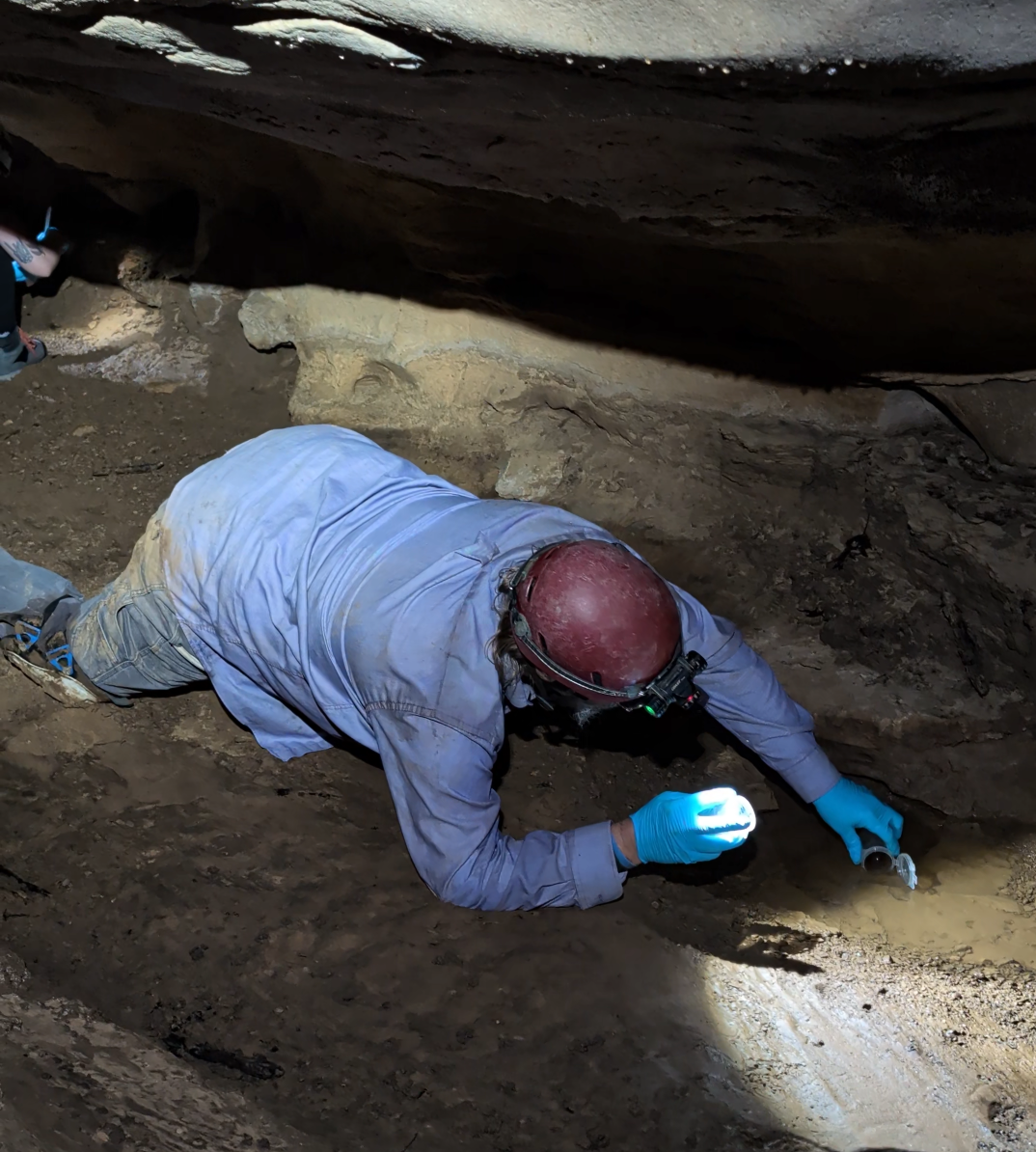
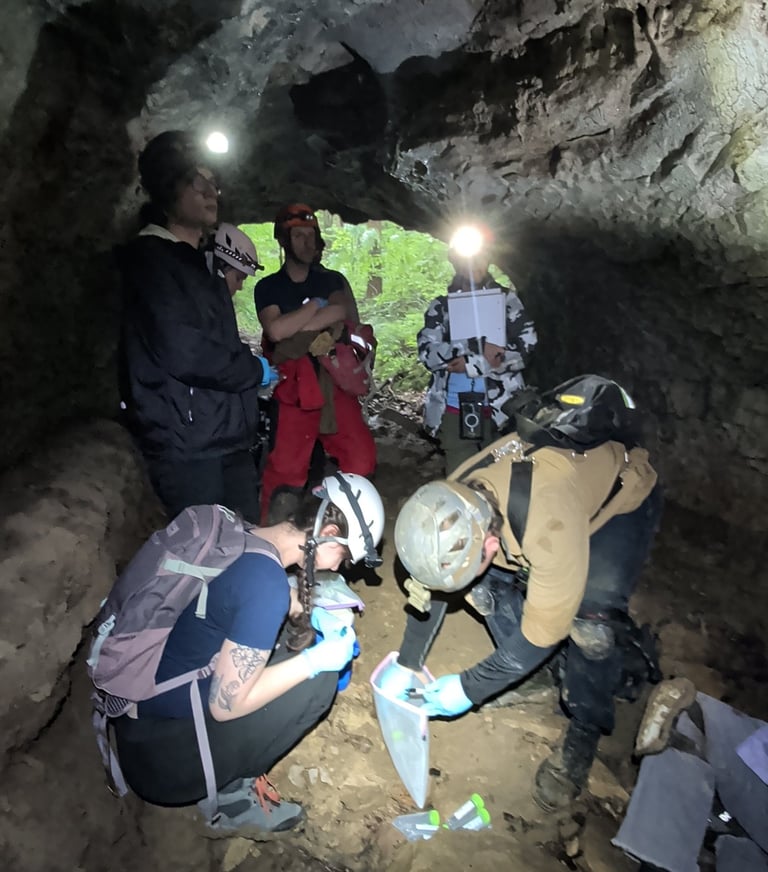
We spent the day sampling caves at Lone Star Preserve with volunteers from all kinds of backgrounds, all of whom willingly followed a feral scientist underground after hearing the phrase "scientific sampling." That alone suggests a level of judgment I deeply respect. Some participants had scientific backgrounds, some had extensive caving experience, and some simply thought helping collect research samples sounded fun. More importantly, everyone showed up ready to learn, ask questions, and get involved in the actual work instead of standing around politely watching us do it.
Because that's really the whole point of this program. We aren't interested in creating an experience where people watch science happen from fifteen feet away while somebody points at things with a clipboard. If we're going to take people into a cave, they're going to help do the science. The samples collected during this trip are real research samples that will become part of ongoing Washburn CHAOS Lab projects. They're headed into the exact same analytical pipeline as every other sample we collect, which means some of the tubes currently sitting in our freezers contain material collected by citizen scientists who, only a few hours earlier, were learning why scientists become emotionally attached to Sharpies.
Before heading underground, we talked about what we were actually trying to learn from these caves. One of the recurring themes at the Washburn CHAOS Lab is that nature doesn't care about the imaginary boundaries humans draw around scientific disciplines. The microbes don't know they're microbiology. The limestone doesn't know it's geology. The water isn't aware it belongs to hydrology. Nobody underground got the departmental memo. Everything is interacting with everything else all the time. The chemical arsenal is created by the microbes. The microbes are influenced by the geology. The geology affects the movement of water and nutrients. The atmosphere changes environmental conditions. The whole thing becomes one giant interconnected system that refuses to fit neatly inside a textbook chapter, which is exactly why we find it interesting.
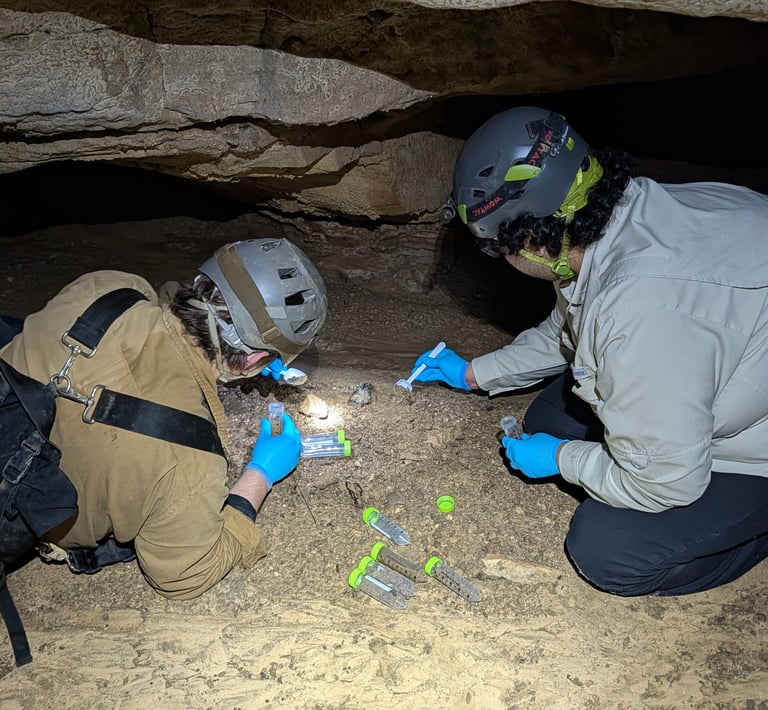
Then came tube labeling. So much tube labeling. An amount of tube labeling that felt personally directed at me by the universe. Every sample needs an identifier. Every identifier needs documentation. Every location needs environmental data. Every environmental measurement needs to be tied back to a sample. Every sample sheet needs to agree with every tube. Good science depends on organization, and unfortunately the samples refuse to label themselves. We have asked.
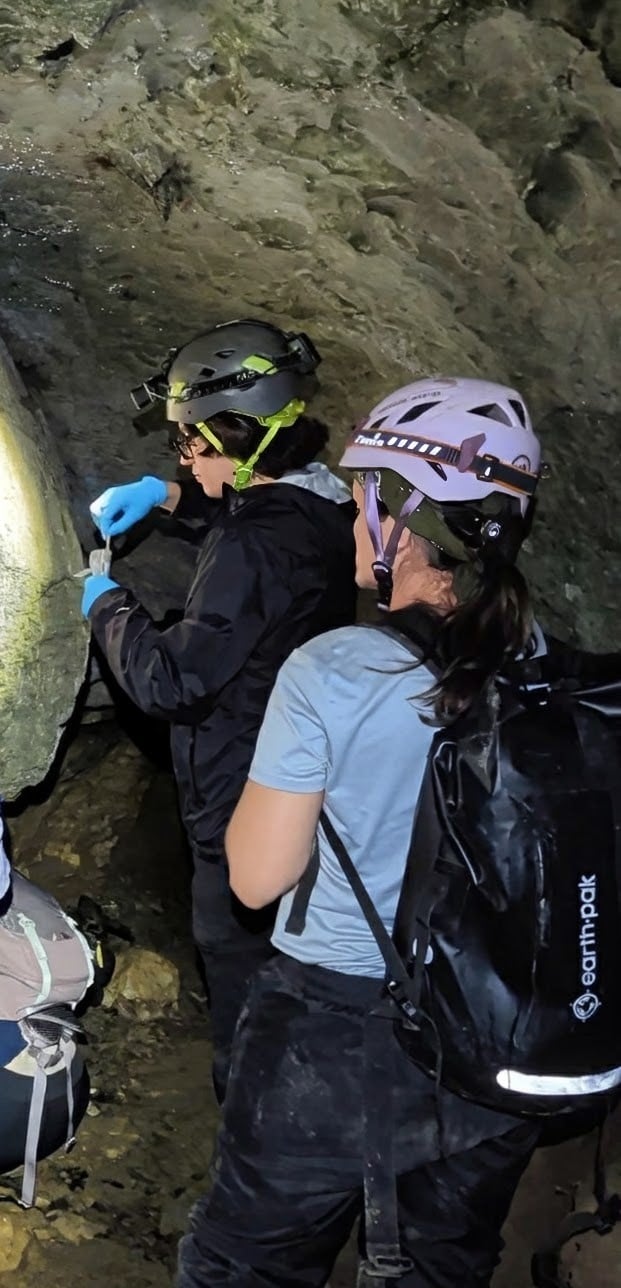
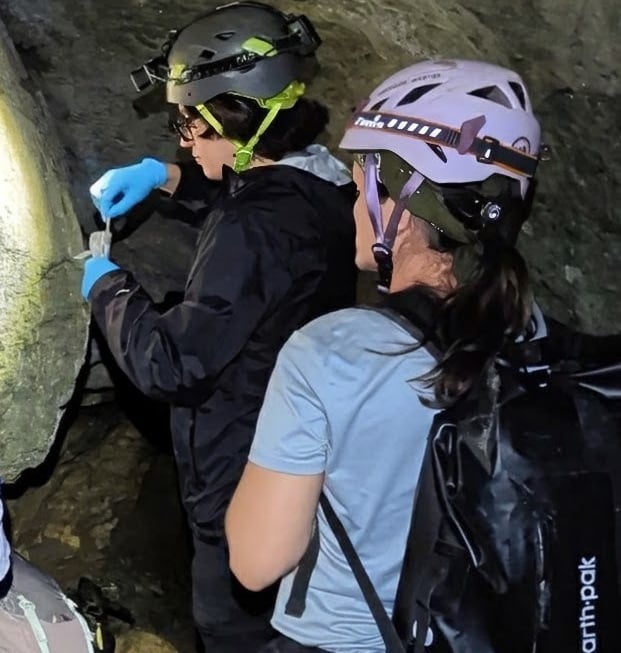
Once the paperwork beast had been adequately fed, we split into teams and started collecting samples. Participants helped select sampling locations throughout the caves, which sounds very scientific but frequently involved groups of adults staring intently at cave walls and saying things like, "Okay, but that weird hairy thing over there looks interesting." To be fair, some of the greatest scientific discoveries in history began with somebody noticing something weird and refusing to leave it alone.
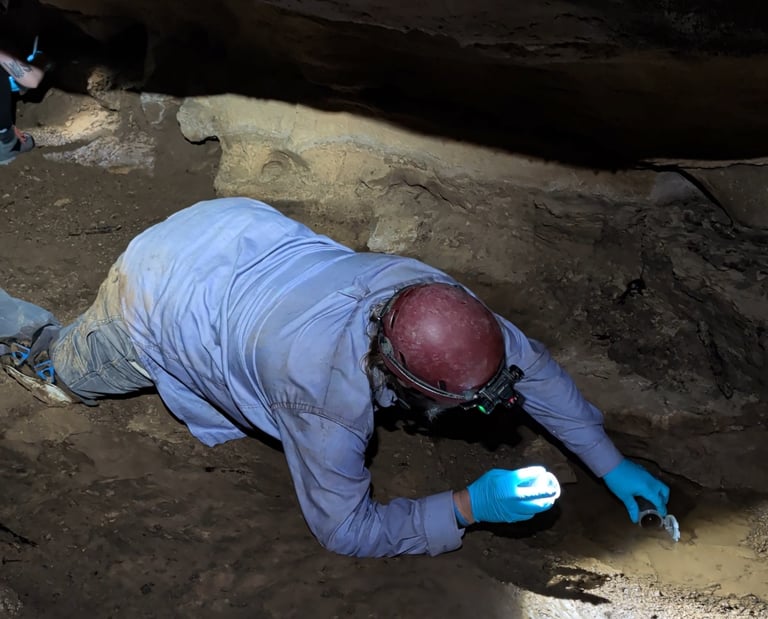
Using field-sterile techniques, participants collected sediments, fungal material, visible mycelium, cave wall swabs, and water samples while carefully documenting where every specimen originated. We also collected atmospheric measurements and environmental observations throughout the caves because if we're going to ask why certain microbes live somewhere, it helps to know whether that somewhere is humid, dry, warm, cool, dripping, windy, chemically strange, or generally behaving like a cave that has opinions. Every sample location was documented, every site photographed, every observation was recorded, and every environmental measurement was logged because six months from now nobody wants to be looking at a spreadsheet wondering, "What exactly did we mean by weird wall thing?"
Now comes the fun part. The samples head to the lab, where we'll sequence DNA to identify microbial communities, analyze geochemistry to understand the environments they're living in, and characterize the metabolites and other compounds being produced throughout the system. In other words, we're going to find out who's there, what they're living on, what weird chemistry they're are up to, and how the geology, chemistry, atmosphere, and biology all conspired together to create that particular little corner of underground chaos.
And yes, the citizen scientists who helped collect those samples will receive acknowledgment in the resulting presentations and scientific publications, just like all Washburn CHAOS Lab citizen scientists. If data from these samples appears in a conference presentation, poster, thesis, dissertation, outreach talk, or peer-reviewed publication, the people who helped collect those samples deserve credit for helping make that science possible. That's one of the reasons we built this program in the first place. People aren't helping us pretend to do science. They're helping us actually do it.
Science is metal. Science is feral. Science is CHAOS.
Washburn CHAOS Lab
Science is metal. Science is feral. Science is CHAOS.
director@washburnchaoslab.com
#washburnchaoslab
© 2025. All rights reserved.
complex host-abiotic systems
@washburnchaoslab
Feral scientists exploring hostile systems, unstable environments, and the chemistry shaping what survives there.
#feralscience